
A marine lubricating-oil cooler removes heat absorbed by the oil while it lubricates and cools an engine, gearbox, turbine, thrust bearing or other rotating equipment. Its main purpose is to maintain the oil within the equipment manufacturer’s specified operating-temperature range.
In a shell-and-tube oil cooler, hot lubricating oil normally flows around the outside of the tubes while seawater or freshwater passes through them. Heat transfers from the oil to the cooling water without allowing the two fluids to mix. Seawater is usually kept on the tube side because the tubes are easier to inspect, clean or replace.
Maintaining the correct oil temperature is essential because overheated oil becomes too thin and loses viscosity. This can weaken the lubricating film, reduce bearing protection, accelerate oxidation and increase wear. Oil that is excessively cold becomes too viscous, causing poor circulation, higher pumping resistance and increased mechanical losses.
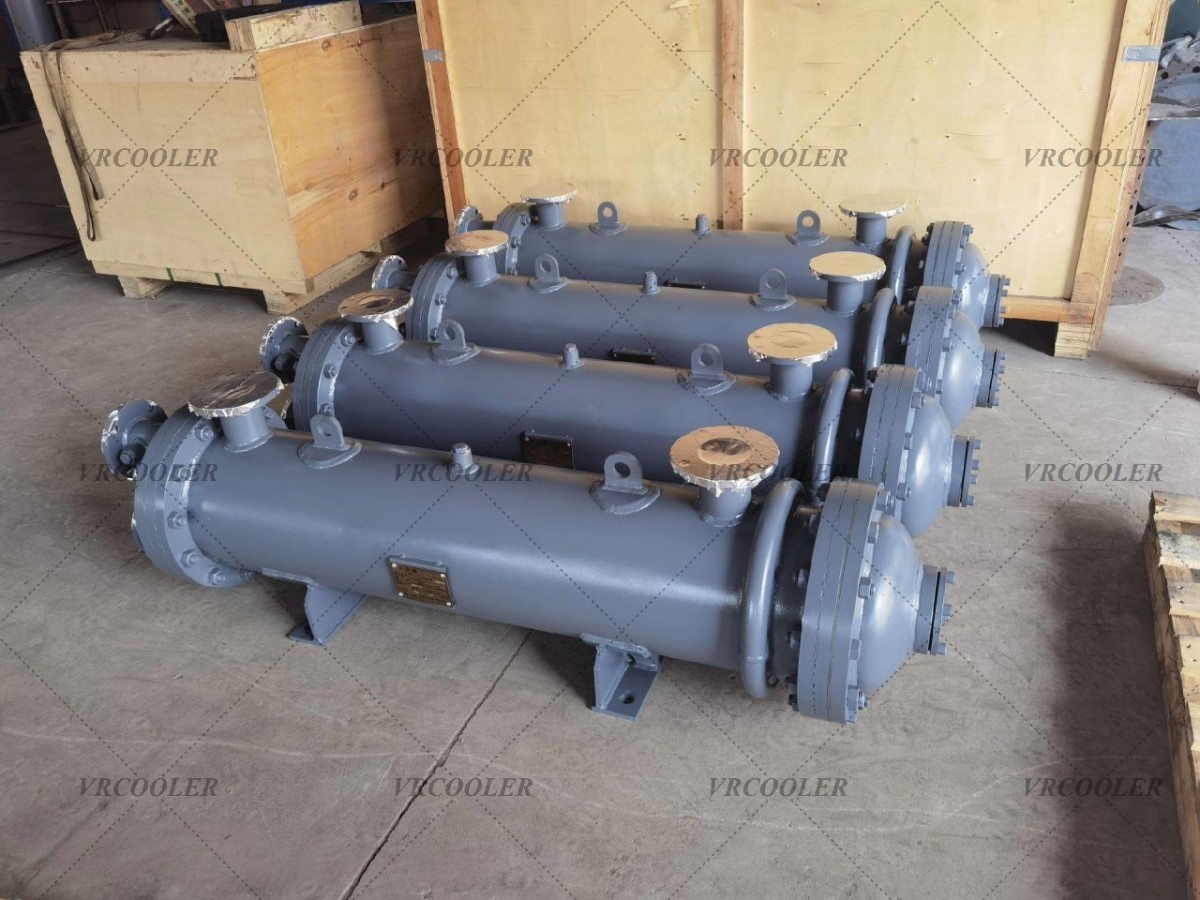
A properly sized marine lube-oil cooler helps to:
- Maintain stable oil temperature and viscosity
- Protect bearings, gears and rotating components
- Reduce oil oxidation, sludge and varnish formation
- Extend lubricant and equipment service life
- Prevent high-temperature alarms and unplanned shutdowns
- Support reliable engine or gearbox operation under changing loads
Oil temperature is commonly controlled by a thermostatic three-way valve or bypass arrangement that regulates how much oil passes through the cooler. Cooler performance depends on oil flow, heat load, cooling-water temperature and flow, tube cleanliness and pressure drop. Fouled tubes, insufficient seawater flow or internal leakage can reduce cooling capacity and may allow seawater to contaminate the lubricating system.