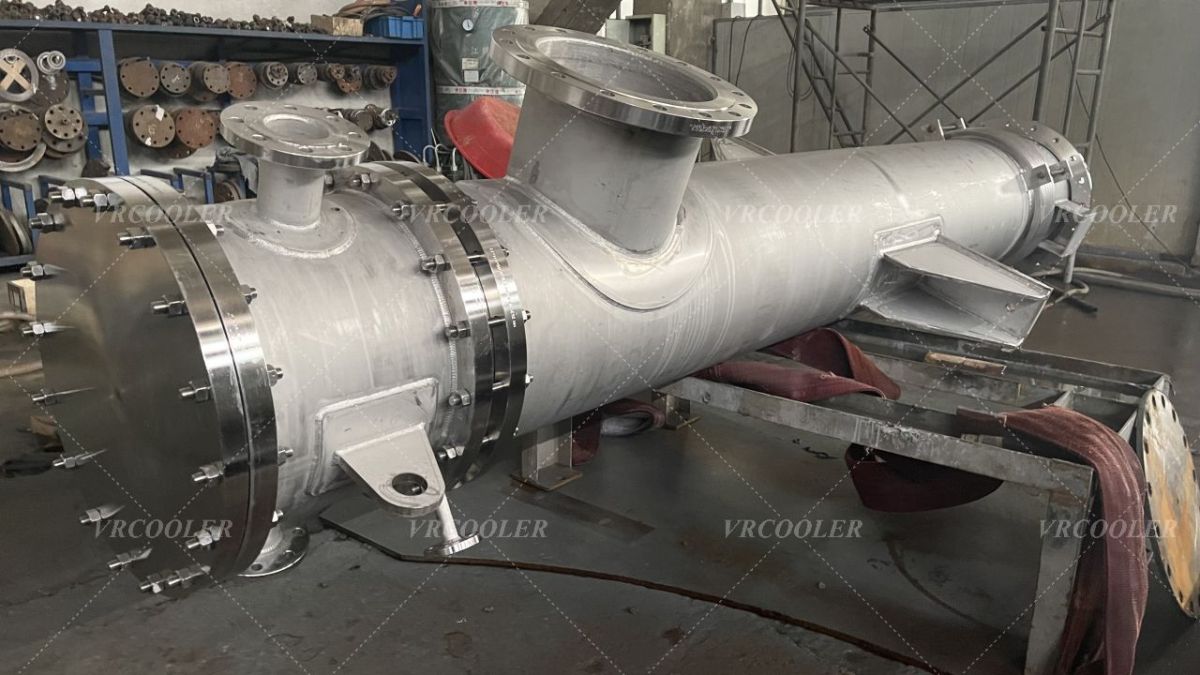
The main function of a dump condenser is to safely receive and condense surplus or bypassed steam when the normal steam-consuming equipment cannot accept it. This commonly occurs during turbine startup, shutdown, sudden load reduction, turbine trip, process interruption or temporary imbalance between boiler output and steam demand.
In a shell-and-tube dump condenser, the diverted steam normally enters the shell side while cooling water flows through the tubes. The steam releases its latent heat to the cooling water and changes into condensate. If the incoming steam is highly superheated, pressure reduction and spray-water desuperheating may be provided before or at the condenser inlet.
A dump condenser performs several important functions:
- Prevents excessive steam-system pressure
- Allows the boiler or waste-heat-recovery system to remain in operation during temporary load changes
- Protects turbines, valves, pipelines and downstream process equipment
- Avoids discharging large quantities of steam directly into the atmosphere
- Reduces noise, visible steam plumes and energy losses
- Recovers condensate that may be returned to the boiler-feedwater system
- Helps stabilize the overall steam and condensate balance
Unlike the main surface condenser, which continuously condenses turbine exhaust steam during normal operation, a dump condenser is generally designed for intermittent or emergency steam-bypass service. However, some systems require continuous operation when excess process steam is regularly produced.
Its capacity must be based on the maximum dump-steam flow, steam pressure and temperature, cooling-water conditions, required condensing pressure and allowable backpressure. Correct sizing is essential because an undersized dump condenser can cause rising pressure, incomplete condensation, unstable operation and steam discharge through vents or safety devices.