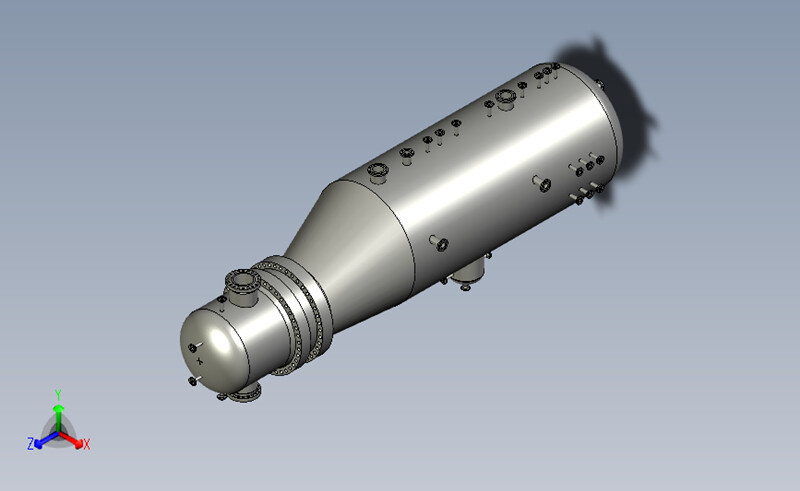
The main function of a regenerator reboiler is to supply the heat required to regenerate the solvent in a stripping column or regeneration tower. In amine gas treating, refinery acid gas removal, natural gas sweetening, and carbon capture systems, the solvent absorbs CO₂, H₂S, or other acid gases in the absorber. After absorption, the rich solvent flows to the regenerator, where it must be heated to release the absorbed gases and return to a lean condition.
The regenerator reboiler is installed at the bottom of the column and heats part of the solvent by using steam, hot oil, or another heating medium. This heating process generates vapor inside the reboiler or reboiler circuit. The vapor rises through the regenerator column and provides the stripping action needed to separate acid gases from the rich solvent. After this process, the regenerated lean solvent is cooled and circulated back to the absorber for continuous operation.
A well-designed regenerator reboiler is critical for stable solvent regeneration. If the reboiler does not provide enough heat, the solvent will not be fully regenerated, and the lean solvent will still contain too much CO₂ or H₂S. This reduces absorption efficiency and may cause the whole gas treating or carbon capture system to perform poorly. On the other hand, excessive reboiler temperature can increase steam consumption, accelerate solvent degradation, form heat-stable salts, and raise the risk of corrosion.
For this reason, the reboiler must be carefully designed according to solvent type, circulation rate, acid gas loading, column pressure, required heat duty, steam pressure, allowable pressure drop, fouling tendency, and corrosion conditions. In many industrial systems, shell and tube kettle reboilers or thermosiphon reboilers are selected because they provide strong mechanical construction, reliable heat transfer, and stable operation under continuous service.
In simple terms, the regenerator reboiler is the heat source that makes solvent reuse possible. It helps remove absorbed acid gases from the rich solvent, restore the solvent’s absorption capacity, maintain the required lean solvent quality, and support efficient long-term operation of the gas treating or carbon capture plant.