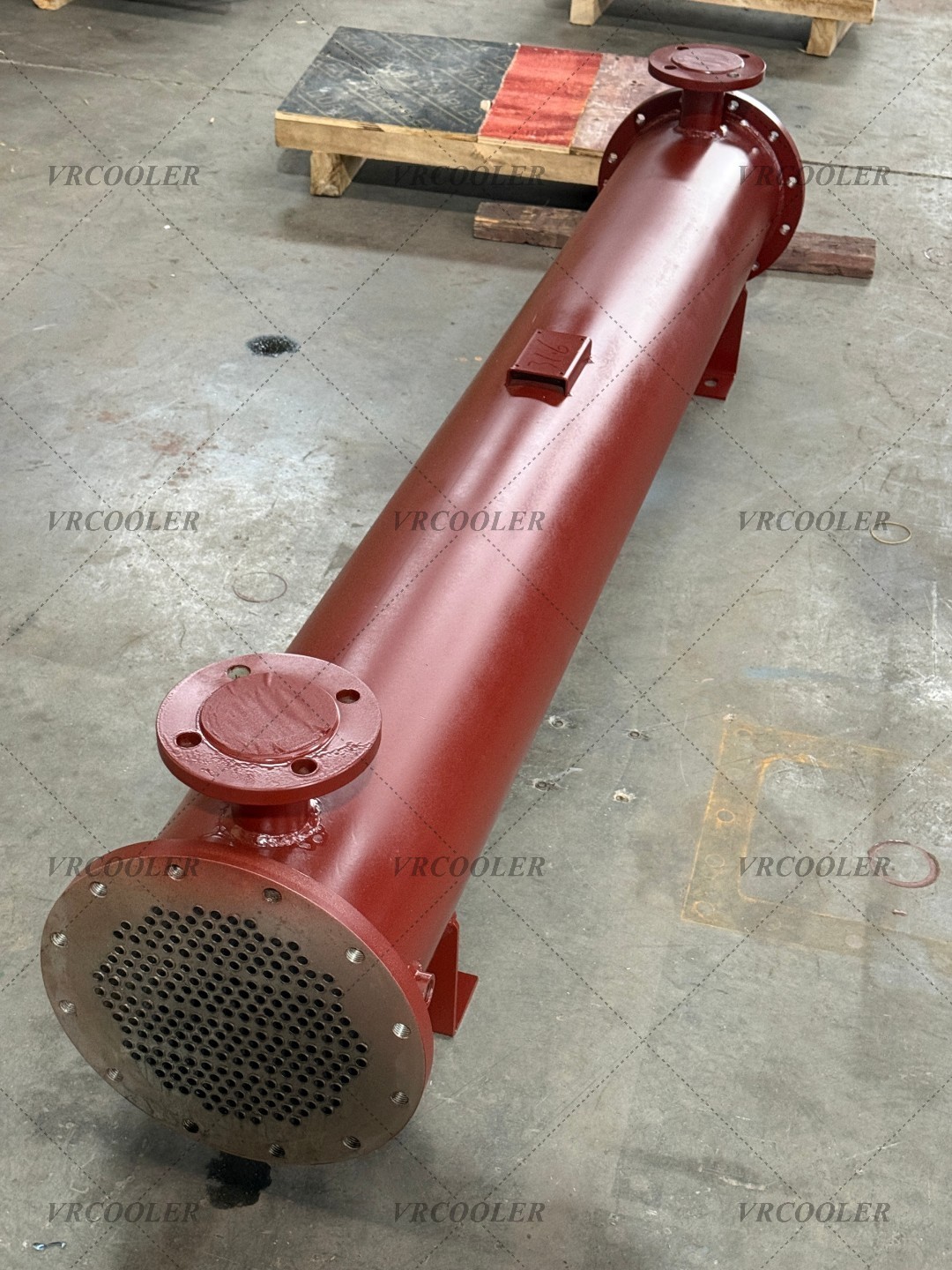
The main function of a shell-and-tube heat exchanger in a data center liquid-cooling system is to transfer heat from the IT equipment cooling loop to the facility cooling loop without allowing the two fluids to mix.
In a direct-to-chip system, coolant flows through cold plates attached to CPUs, GPUs and other high-heat components. After absorbing heat, the warm coolant returns to the CDU or heat-exchanger station. Inside the shell-and-tube heat exchanger, this heat passes through the tube walls to facility water or a water-glycol solution. The facility loop then transports the heat to a dry cooler, cooling tower, chiller or heat-recovery system.
The heat exchanger performs several important functions:
- Hydraulic separation: The technology cooling system and facility water system can operate at different pressures and flow rates.
- Coolant protection: Sensitive cold plates and small cooling channels are protected from rust, scale, suspended particles and unsuitable facility-water chemistry.
- Temperature control: The heat exchanger helps maintain a stable coolant supply temperature for servers and liquid-cooled racks.
- Fluid compatibility: Each loop can use the most suitable medium, such as treated water on the IT side and water-glycol on the outdoor facility side.
- Pressure protection: Pressure fluctuations from pumps, dry coolers or other facility equipment are not transferred directly to the IT cooling loop.
- Heat rejection and reuse: The transferred heat can be discharged outdoors or reused for building heating, domestic hot water preheating or other low-temperature applications.
Shell-and-tube heat exchangers are particularly suitable for large-capacity installations, high operating pressures or applications requiring a mechanically robust and serviceable design. Options such as removable tube bundles, corrosion-resistant stainless-steel tubes and double-tube-sheet construction can make inspection, cleaning and leak management easier.
Select the exchanger based on the server heat load, coolant temperatures, required approach temperature, flow rates, pressure drops, fluid properties, and redundancy requirements. Correct sizing is important because an undersized or fouled heat exchanger can increase coolant temperatures, reduce free-cooling hours and limit the available cooling capacity for high-density AI and GPU racks.