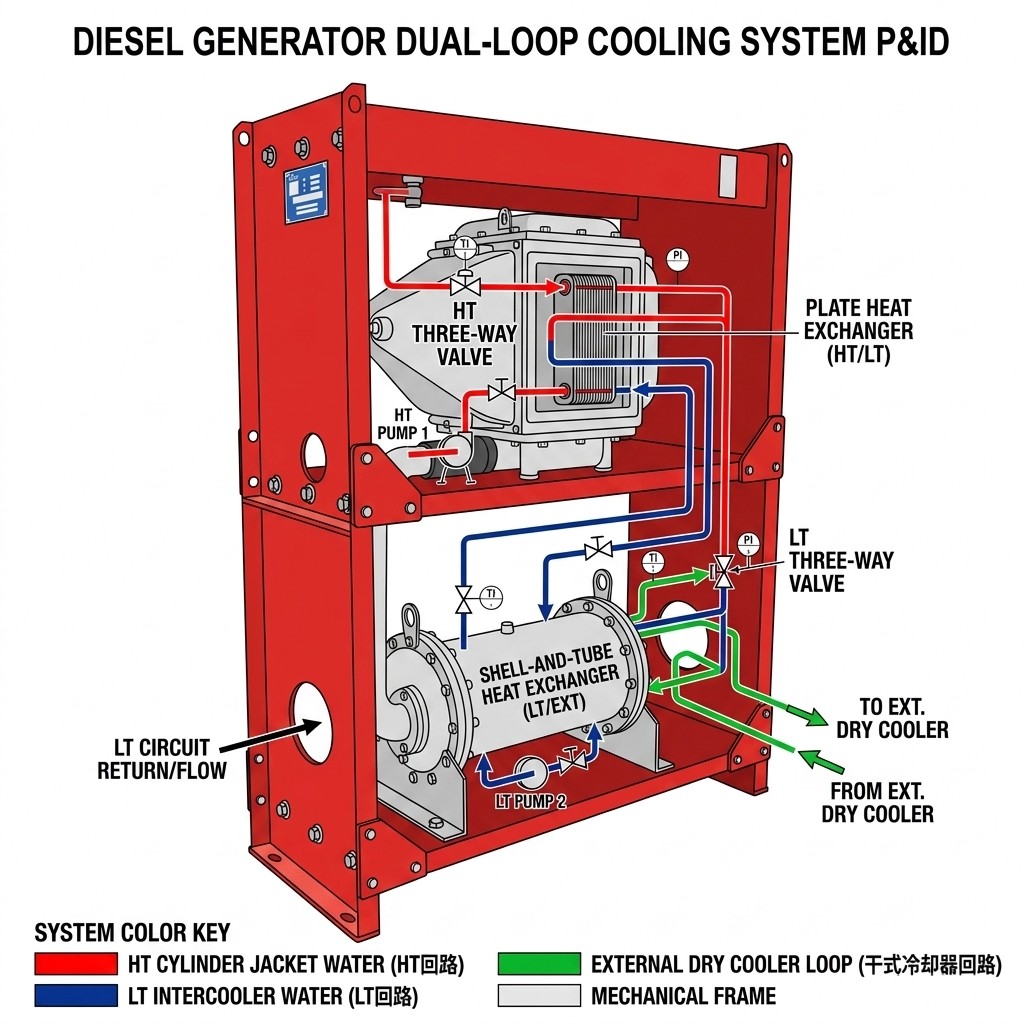
The main function of the shell and tube heat exchanger in a genset ethylene glycol cooling skid is to remove heat from the hot glycol-water mixture circulating through the generator set cooling system.
During genset operation, the engine produces a large amount of heat from the jacket water circuit, charge air cooler circuit, lubricating oil circuit, or auxiliary cooling loop. The ethylene glycol solution absorbs this heat and flows to the shell and tube heat exchanger. Inside the exchanger, the heat is transferred to another cooling medium, such as cooling water, chilled water, seawater, or another glycol loop. The cooled glycol then returns to the genset to continue protecting the engine.
This heat exchanger helps keep the generator set at a stable operating temperature. If the glycol temperature becomes too high, the engine may suffer from high coolant temperature alarms, reduced output, lower efficiency, or emergency shutdown. By maintaining proper cooling, the shell and tube heat exchanger protects key engine parts such as the cylinder block, cylinder liners, turbocharger, charge air cooler, and lubricating oil system.
In simple terms, the heat exchanger is the core cooling component of the skid. It keeps the genset cooling loop stable, prevents overheating, improves operating reliability, and supports continuous power generation.