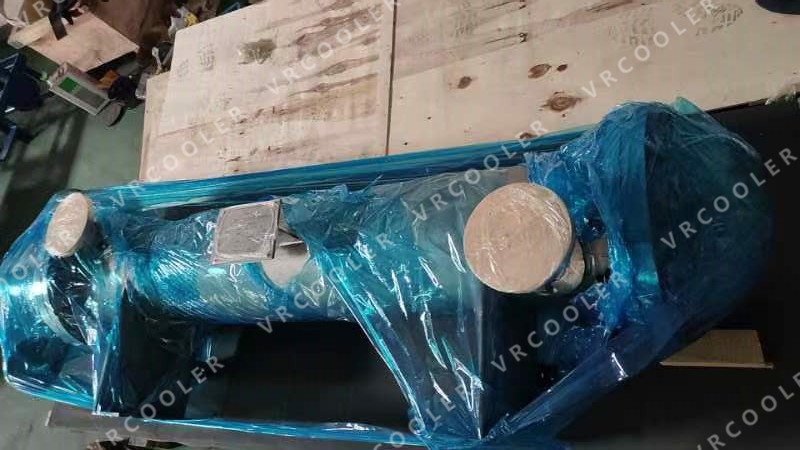
The main function of the shell and tube heat exchanger in a BESS system is to remove heat from the battery liquid-cooling loop and transfer it to an external cooling circuit.
In a liquid-cooled Battery Energy Storage System, the battery cells, modules, PCS, inverter, and auxiliary equipment generate heat during charging and discharging. A water-glycol coolant circulates through cold plates or battery cooling channels to absorb this heat. The shell and tube heat exchanger then transfers the heat from this hot battery-side coolant to another medium, such as chilled water, cooling water, or an outdoor dry cooler glycol loop.
Another important function is circuit separation. The heat exchanger keeps the battery-side coolant loop independent from the external cooling loop. This helps prevent contamination, protects battery cooling components, and allows each circuit to operate with its own pressure, flow rate, glycol concentration, and water quality requirement.
By maintaining stable coolant temperature, the shell and tube heat exchanger helps keep the battery cells within a safe operating range. This reduces thermal stress, slows battery aging, improves charging and discharging efficiency, and lowers the risk of high-temperature alarms or system shutdown.
In simple terms, the shell and tube heat exchanger is the thermal bridge between the BESS battery cooling circuit and the heat rejection system. It protects the batteries, supports safe operation, and helps the energy storage system run reliably in different ambient conditions.