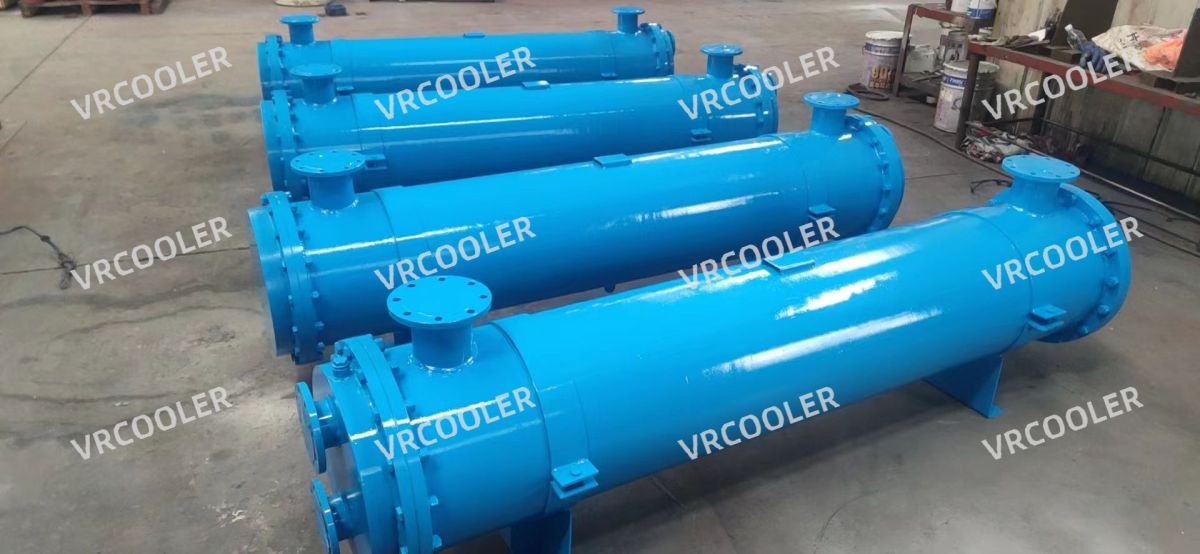
A closed-loop cooling-water exchanger requires regular monitoring, cleaning, water-quality control, inspection, and leakage testing to maintain its cooling capacity and prevent cross-contamination.
Operators should routinely record fluid inlet and outlet temperatures, flow rates, pressures, and pressure drops on both circuits. A gradual rise in pressure drop or cooling-water outlet temperature can indicate scale, sediment, biological fouling, blocked passages, insufficient flow, or trapped air.
Both water circuits should be tested periodically for pH, conductivity, hardness, chlorides, glycol concentration, and corrosion-inhibitor condition. Strainers and filters should be cleaned or replaced before accumulated debris restricts flow. Air vents, expansion tanks, pumps, valves, and flow-control devices should also be checked to ensure stable circulation.
Heat-transfer surfaces require periodic cleaning. Shell-and-tube exchangers may be mechanically brushed, flushed, or chemically cleaned, while plate exchangers can be opened for plate and gasket inspection. The cleaning method must be compatible with the tube or plate material and the type of deposits.
Inspect tubes, plates, tubesheets, baffles, gaskets, seals, and connections for corrosion, erosion, cracking, vibration damage, and leakage. Hydrostatic or pneumatic testing can be performed during scheduled shutdowns, and eddy-current testing may be used to assess tube-wall condition.
After cleaning or repair, the exchanger should be correctly reassembled, vented, refilled, leak-tested, and gradually returned to service. Maintenance frequency should be based on water quality and performance trends rather than a fixed interval alone.