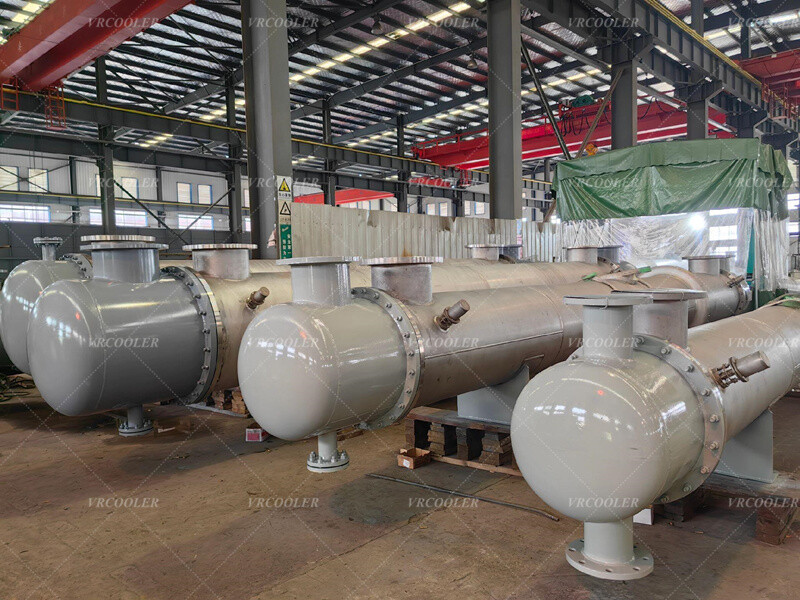
Common materials for gland steam condensers include carbon steel, stainless steel, copper alloy, brass, and copper-nickel, depending on the cooling medium, water quality, operating temperature, corrosion risk, and power plant specification.
For the shell, carbon steel is commonly used because the steam-side condition is usually low pressure and not highly corrosive. If the environment is humid, corrosive, or requires longer service life, stainless steel 304 or stainless steel 316L can be selected.
For the tubes, stainless steel tubes, copper alloy tubes, brass tubes, or copper-nickel tubes are commonly used. Stainless steel tubes are suitable for clean condensate, closed cooling water, or applications requiring better corrosion resistance. Copper alloy or brass tubes are often used for good thermal conductivity. Copper-nickel tubes are suitable when the cooling water has higher chloride content or marine-type corrosion risk.
Tube sheets are usually made from carbon steel, stainless steel, brass, naval brass, or clad material. The material should match the tube material and cooling water condition to reduce galvanic corrosion. For better reliability, baffles, supports, and internal parts can also be made from stainless steel or coated carbon steel.
For replacement projects, material selection should consider the original condenser design, cooling water quality, steam condition, condensate quality requirement, corrosion history, and plant maintenance practice. A properly selected material combination helps improve heat transfer performance, reduce leakage risk, and extend the service life of the gland steam condenser.