
Oil-water coolers are mainly used in forced oil and forced water transformer cooling systems, commonly known as OFWF cooling systems.
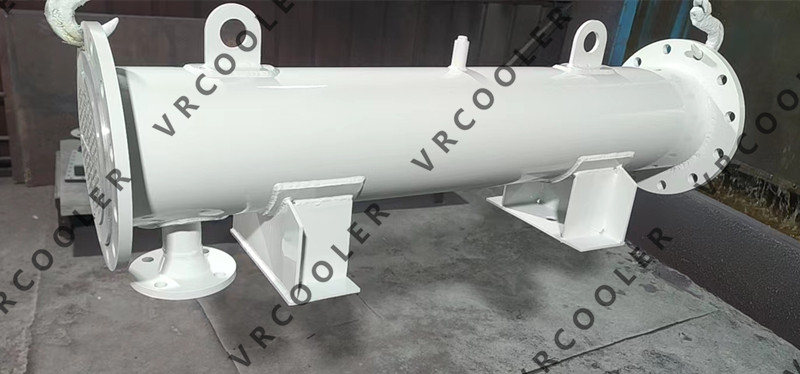
In an OFWF system, transformer oil is circulated by an oil pump through the transformer windings, core area, and oil-water cooler. The hot oil carries heat away from the transformer active parts and enters the shell and tube cooler. At the same time, cooling water flows through the other side of the heat exchanger and removes the heat from the oil. After cooling, the transformer oil returns to the transformer tank and continues the cooling cycle.
This type of cooling system is commonly used for large power transformers, substation transformers, converter transformers, rectifier transformers, furnace transformers, traction transformers, and industrial transformers with high heat loads. It is especially suitable when the transformer has limited installation space, high cooling capacity requirements, or when a plant already has a reliable cooling water system.
Oil-water coolers can also be used in transformer systems where oil-air radiators are not practical or not efficient enough. Compared with oil-air cooling, oil-water cooling can provide stronger heat transfer in a more compact structure. This makes it useful for indoor substations, underground substations, offshore platforms, power plants, steel plants, chemical plants, and other sites where space and heat rejection efficiency are important.
For critical transformer applications, the oil-water cooler may be designed with a double tube sheet structure or leakage detection arrangement. This helps reduce the risk of cooling water entering the transformer oil circuit, which is very important because water contamination can damage transformer insulation and reduce dielectric strength.
In simple terms, oil-water shell and tube coolers are used in transformer cooling systems that require forced oil circulation, efficient heat removal, compact design, and reliable long-term temperature control.