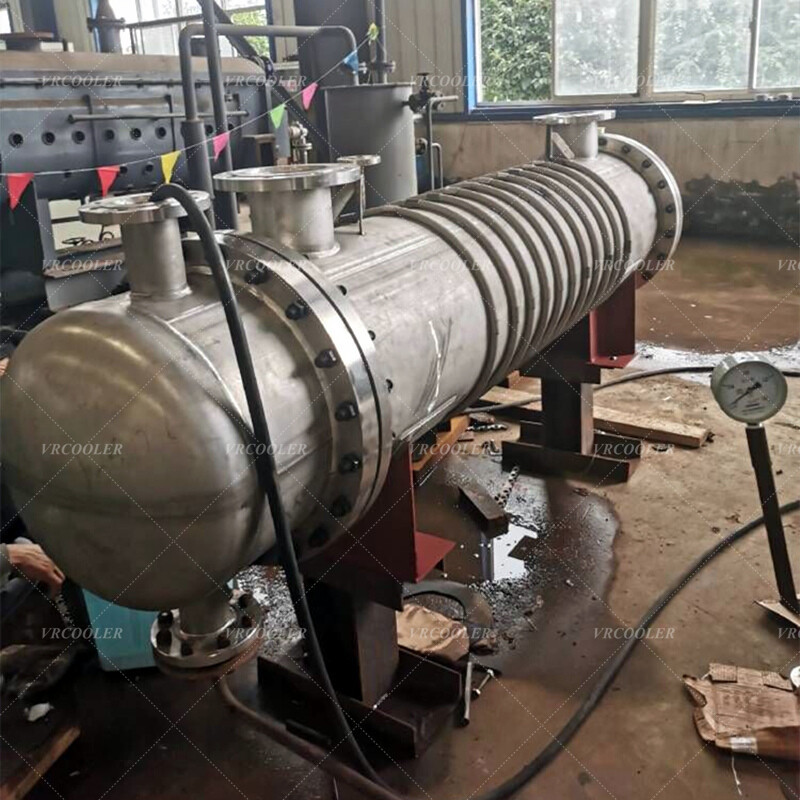
Shell and tube heat exchangers are commonly used as ORC evaporators because they can handle industrial heat sources, pressure differences, and two-phase evaporation of the organic working fluid. The most suitable type depends on the heat source condition. For clean hot water, thermal oil, or closed-loop waste heat systems, a BEM fixed tubesheet or BEU U-tube shell and tube evaporator can be used. For geothermal brine, dirty hot water, or scaling heat sources, an AES or AET floating-head shell and tube evaporator is often preferred because the tube bundle can be removed for inspection and mechanical cleaning.
In ORC systems, the evaporator must provide stable heat transfer to vaporize the organic working fluid before it enters the turbine or expander. If the heat source contains chlorides, minerals, sulphides, or other corrosive components, materials such as stainless steel, duplex stainless steel, titanium, or nickel alloy may be required. A properly selected ORC evaporator helps improve power generation efficiency, reduce fouling problems, and extend the service life of the ORC plant.