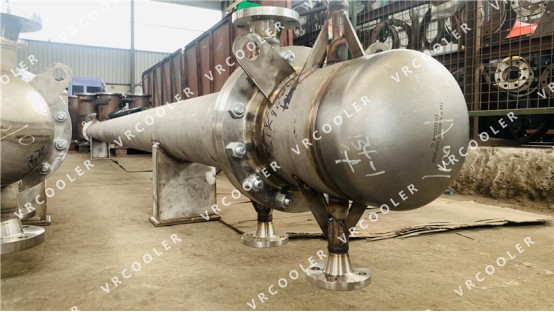
Gas coolers and condensate coolers are used in many parts of onshore and offshore oil-and-gas facilities where gas or hydrocarbon liquid must be cooled before compression, separation, storage, export, or further processing.
In onshore gas plants, shell and tube gas coolers are commonly installed after gas compressors as compressor aftercoolers or intercoolers. They reduce the gas temperature after compression, protect downstream separators and dehydration units, and help improve process stability.
In gas gathering stations and wellhead processing facilities, gas coolers are used to cool produced gas before separation, metering, dehydration, or gas treatment. Lowering the gas temperature can help condense heavier hydrocarbons and water vapor, making separation more effective.
In offshore platforms and FPSO units, gas coolers and condensate coolers are widely used in compact process skids. They may be applied in gas compression packages, fuel gas systems, gas dehydration units, condensate stabilization units, and export gas cooling systems. Because offshore space is limited, these coolers are often designed with compact layout, corrosion-resistant materials, and easy maintenance access.
Condensate coolers are mainly used after condensate stabilizers, separators, storage preparation systems, or export pumps. They cool hydrocarbon condensate to a safe and suitable temperature before tank storage, export pipeline transfer, metering, or loading.
Typical application positions include compressor discharge cooling, fuel gas cooling, natural gas cooling, gas dehydration system cooling, gas sweetening unit cooling, condensate stabilizer overhead/product cooling, hydrocarbon liquid cooling, and export gas or export condensate cooling.