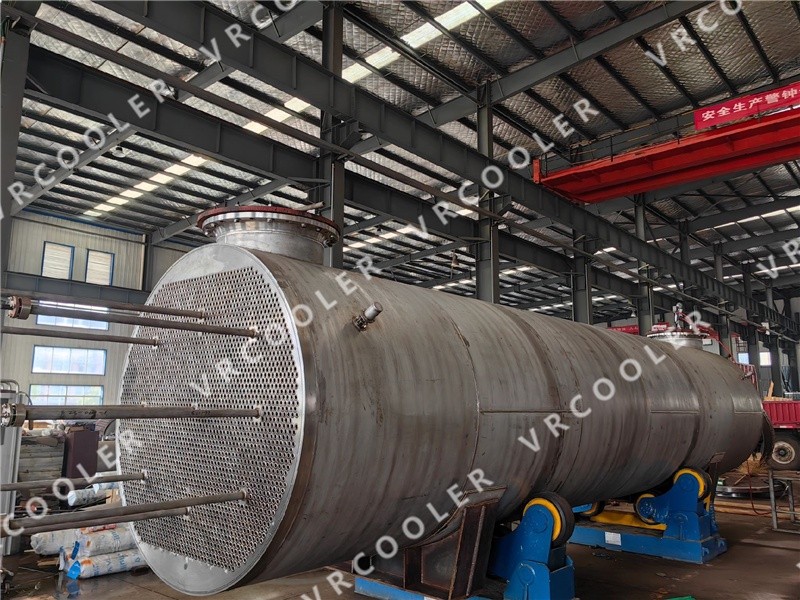
Where are super austenitic stainless steel shell and tube heat exchangers used?
Time :Jun 02, 2026
Super austenitic stainless steel shell and tube heat exchangers are used in corrosive, chloride-rich, acidic, or high-cleanliness industrial services where normal 304 or 316L stainless steel may not provide enough service life.
They are commonly used in the following applications:
1. Seawater and Brackish Water Cooling
These heat exchangers are often used where cooling water contains high chloride levels, such as:
Marine cooling systems
Offshore platforms
Coastal power plants
Desalination plants
Seawater-cooled process coolers
Grades such as 254 SMO, AL-6XN, and Alloy 926 offer much better resistance to pitting and crevice corrosion than 316L stainless steel.
2. Chemical and Petrochemical Plants
Super austenitic stainless steel is suitable for many aggressive chemical processes, especially where acids, chlorides, or mixed corrosive media are present. Typical equipment includes acid coolers, process condensers, solvent coolers, and reactor temperature control heat exchangers.
3. Oil Refinery and Sour Service Applications
In refineries, these exchangers can be used for corrosive process streams, sour water, amine-related service, overhead condensers, and cooling duties where chloride and sulfur compounds may create corrosion risk. The shell and tube structure is preferred because it is strong, cleanable, and repairable during turnaround.
4. Flue Gas Desulfurization and Waste Gas Systems
FGD systems and flue gas condensate applications can contain chlorides, acids, and wet corrosive gases. Super austenitic stainless steel provides better resistance than standard stainless steel in many wet scrubber and gas cooling duties.
5. Wastewater and Industrial Effluent Heat Recovery
Industrial wastewater may contain salts, chemicals, acids, or suspended solids. Shell and tube heat exchangers made with super austenitic stainless steel are used where both corrosion resistance and mechanical cleaning access are required.
6. Fertilizer and Phosphoric Acid Plants
Fertilizer production often involves corrosive fluids such as phosphoric acid, sulfur-containing compounds, chloride contamination, and process water with high dissolved solids. Super austenitic stainless steel can be a practical material choice for coolers, heaters, and condensers in these services.
7. Pharmaceutical, Food, and High-Purity Processing
Where corrosion resistance and cleanability are both important, super austenitic stainless steel can be used for hygienic process heating and cooling. It is selected when 316L is not enough due to chloride cleaning agents, acidic products, or higher corrosion requirements.
8. Evaporators and Condensers for Corrosive Media
They are also used in evaporators, condensers, reboilers, and process coolers handling brine, acidic vapor, salt solutions, chemical condensate, and other aggressive fluids.
In simple terms, super austenitic stainless steel shell and tube heat exchangers are used where corrosion risk is too high for ordinary stainless steel, but the customer still needs a durable, maintainable, and industrial-grade heat exchanger.
For Vrcoolertech projects, these exchangers can be customized with 904L, 254 SMO, AL-6XN, Alloy 926, or other high-alloy stainless steels, depending on chloride content, acid concentration, operating temperature, pressure, fouling condition, and maintenance requirements.
By clicking "Allow All", you agree to the storage of cookies on your device to enhance site navigation, analyze site usage and assist with our marketing efforts. Cookie Notice