
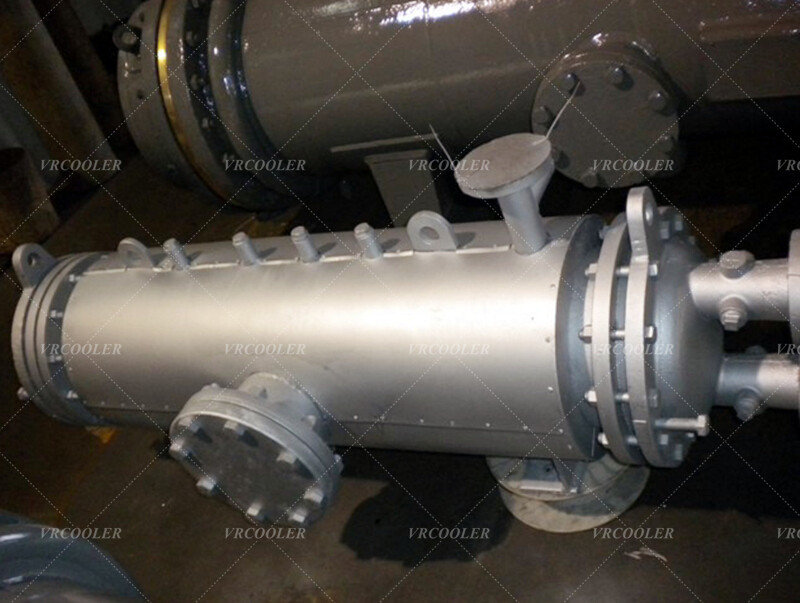
High reliability under harsh operating conditions
Auxiliary engines operate continuously with fluctuating loads, temperatures, and pressures. Shell and tube heat exchangers are mechanically strong and can withstand high lube oil pressure, thermal cycling, and vibration without performance degradation.
Efficient heat transfer for high-viscosity fluids
Lube oil has relatively high viscosity compared to water. The shell and tube design provides sufficient heat transfer area and controlled flow paths, ensuring effective cooling even when oil viscosity changes with temperature and engine load.
Low risk of cross-contamination
The physical separation between the oil side and cooling water side minimizes the risk of oil–water mixing. This is especially important in auxiliary engines, where contamination can lead to bearing damage and reduced engine reliability.
Flexibility in material selection
Shell and tube heat exchangers allow the use of different materials for tubes, shell, and tube sheets. Corrosion-resistant materials can be selected when seawater or poor-quality cooling water is used, extending service life in marine and industrial environments.
Ease of maintenance and cleaning
Many designs feature removable tube bundles, allowing mechanical or chemical cleaning without dismantling the entire unit. This reduces maintenance time and supports long-term, stable operation.
Stable performance over long operating hours
Unlike compact plate-type exchangers, shell and tube units are less sensitive to fouling and pressure fluctuations, making them well suited for the continuous, long-hour operation typical of auxiliary engines.
Long service life and lifecycle cost advantage
Although the initial cost may be higher than compact alternatives, shell and tube heat exchangers offer lower lifecycle cost due to durability, repairability, and extended operating life.
For these reasons, shell and tube heat exchangers remain the industry standard for auxiliary engine lube oil cooling in marine vessels, diesel generator sets, and industrial power systems.