
A flooded evaporator is suitable for water chillers because it provides high heat transfer efficiency, stable chilled water temperature, and reliable performance under large cooling loads.
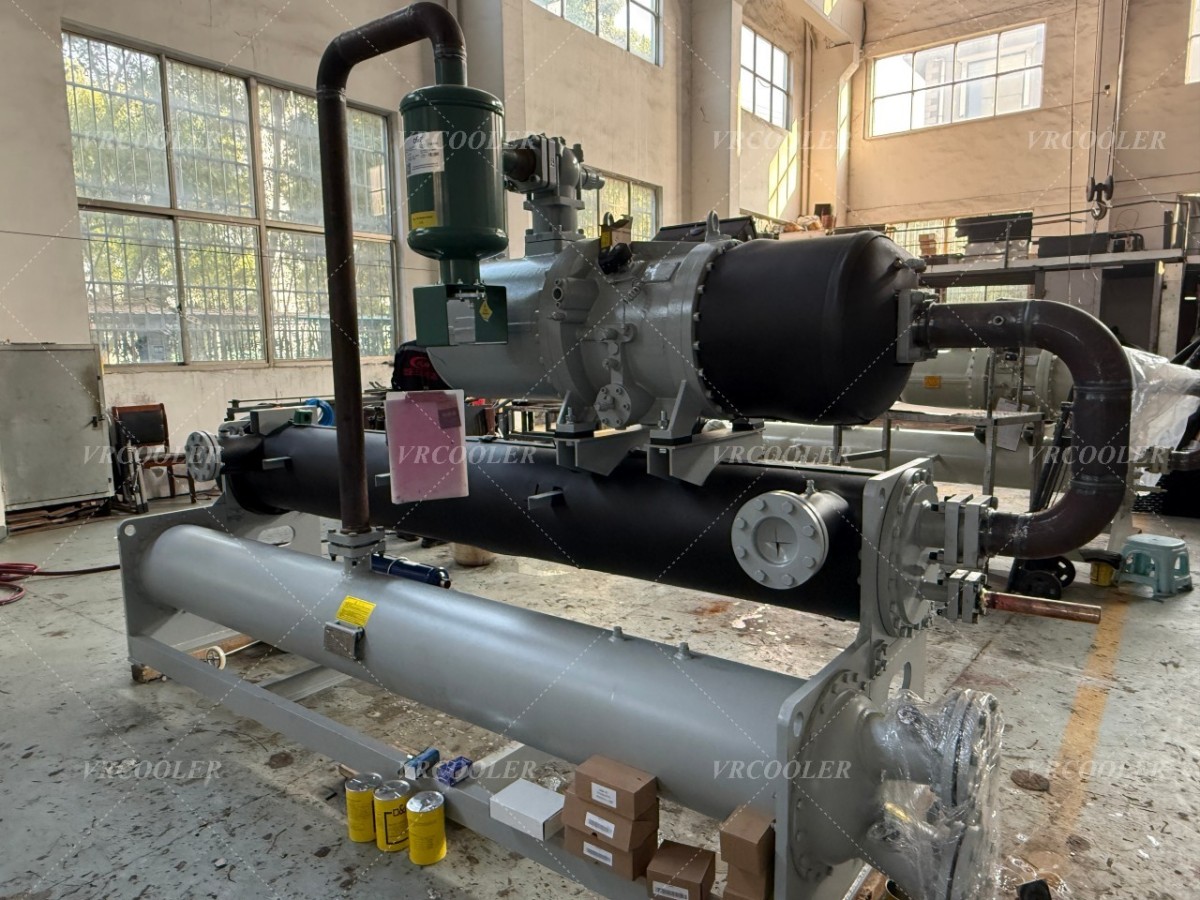
In a flooded evaporator, the tube bundle is surrounded by liquid refrigerant. The chilled water or glycol solution usually flows inside the tubes, while the refrigerant boils on the shell side after absorbing heat from the water. Because the refrigerant fully wets the outside surface of the tubes, the heat transfer area is used very effectively. This allows the chiller to produce chilled water efficiently and maintain a stable outlet temperature.
Flooded evaporators are especially suitable for large water chillers, screw chillers, centrifugal chillers, industrial chillers, district cooling systems, and process cooling applications. These systems often require continuous operation, high cooling capacity, and precise temperature control. A flooded evaporator can handle these requirements better than many smaller or simpler evaporator designs.
Another important advantage is energy efficiency. Because the heat transfer performance is strong, the temperature difference between the refrigerant and chilled water can be smaller. This helps improve chiller efficiency and reduce compressor workload. For large HVAC and industrial cooling systems, even a small improvement in efficiency can reduce long-term operating costs.
A flooded evaporator also offers stable performance under variable load conditions. When the cooling demand changes, the refrigerant level and evaporation process can be controlled to maintain reliable heat exchange. This makes it a good choice for commercial buildings, hospitals, hotels, factories, food processing plants, chemical plants, data centers, and other applications where chilled water supply must remain stable.
In simple terms, a flooded evaporator is suitable for water chillers because it delivers efficient heat transfer, stable chilled water output, high cooling capacity, and dependable long-term operation.