
A shell-and-tube heat exchanger is used in water-source heat pumps because it offers a strong balance of heat transfer performance, mechanical reliability, and practical serviceability. In these systems, the heat exchanger must continuously transfer heat between the refrigerant circuit and the water loop, often under varying temperatures, pressures, and water quality conditions. Shell-and-tube construction handles those demands very well.
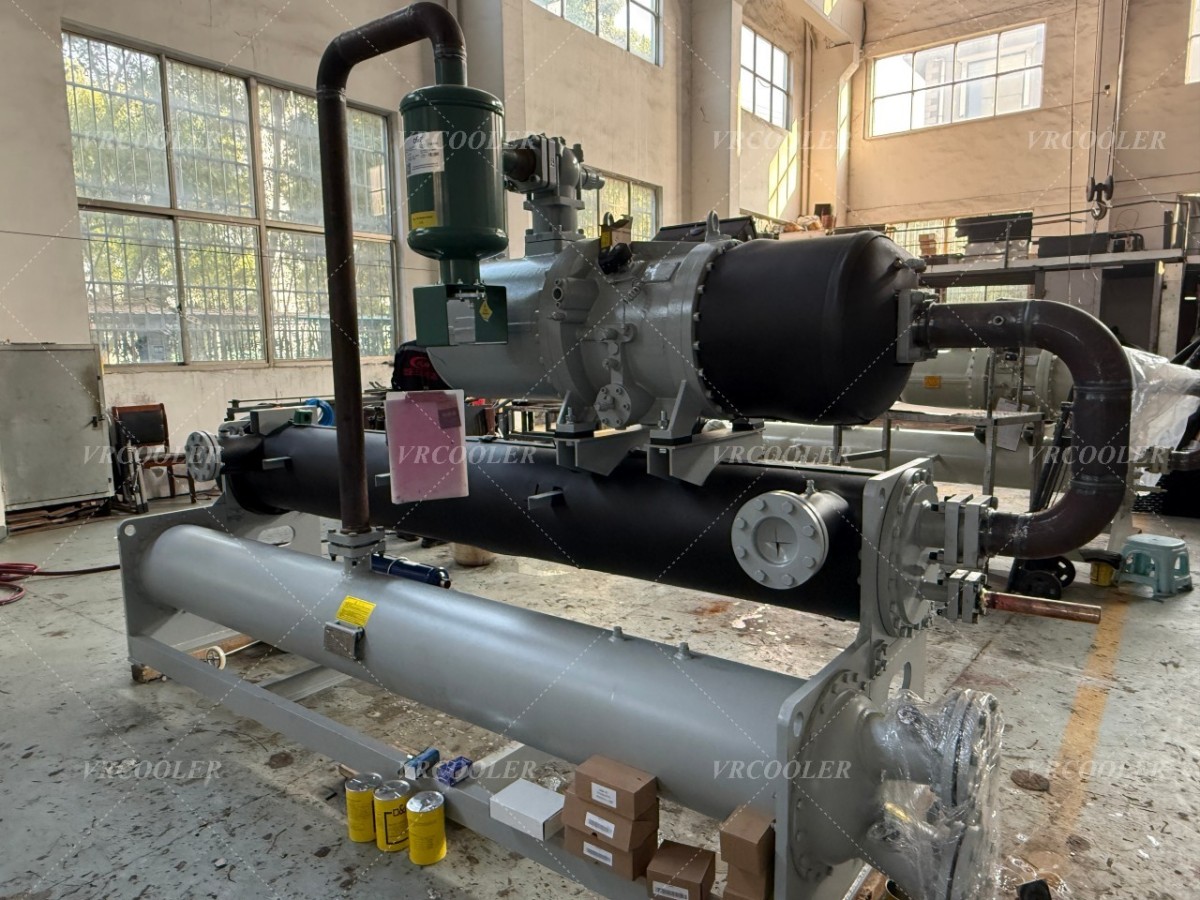
One major reason is mechanical strength. Water-source heat pumps often operate in commercial or industrial environments where the equipment is expected to run for long hours with stable performance. A shell-and-tube exchanger has a robust pressure vessel structure, which makes it suitable for refrigerant duty, water-side pressure fluctuations, and long-term operation. Compared with more delicate heat exchanger types, it is generally more tolerant of demanding service conditions.
Another reason is good compatibility with water systems. In water-source heat pumps, the water side may involve closed-loop water, groundwater, cooling tower water, or geothermal water. These fluids are not always perfectly clean. A shell-and-tube design, especially with the water flowing inside the tubes, is easier to manage when fouling, scale, or suspended solids are possible. The tube side can often be inspected and cleaned more easily than compact exchanger types, which is a major advantage in real operating conditions.
It is also used because of its stable thermal performance. The exchanger can be designed for a wide range of capacities, refrigerants, flow rates, and temperature approaches. Whether the system is running in heating mode or cooling mode, the shell-and-tube exchanger can provide reliable heat transfer between the refrigerant and the water loop. That stability helps the heat pump maintain good capacity and efficient operation.
A further advantage is service life. When properly designed with the right materials, such as copper, stainless steel, or copper-nickel tubes, a shell-and-tube heat exchanger can deliver long-term durability. This is especially important in projects where downtime is costly, such as hotels, office buildings, hospitals, factories, or district energy systems.
In simple terms, shell-and-tube heat exchangers are used in water-source heat pumps because they are:
- strong and reliable
- suitable for continuous operation
- adaptable to different water qualities
- easier to clean and maintain
- available for small to large capacities
- practical for OEM and replacement designs
So while other heat exchanger types can also be used, shell-and-tube units are often chosen when the priority is durability, maintainability, and dependable performance in real water-loop conditions, not just compact size alone.
