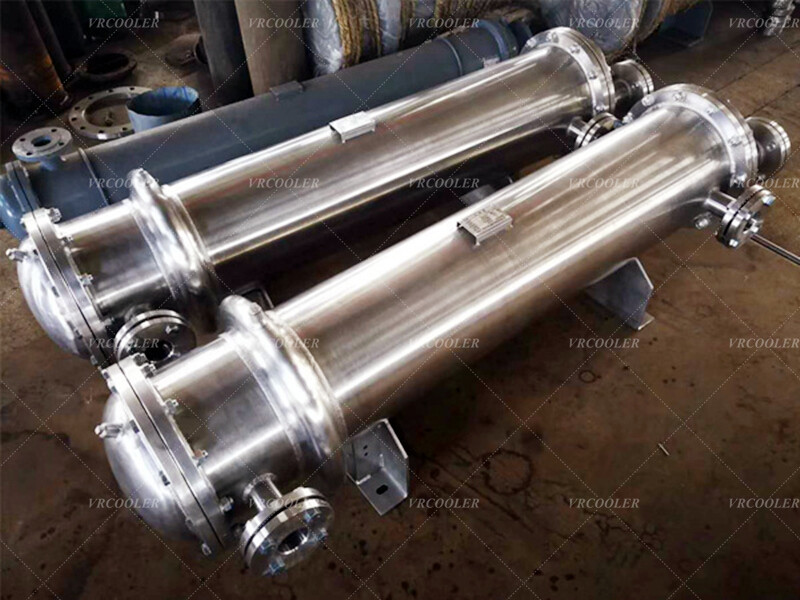
Bearing oil cooling is important in power plants because the bearings of turbines, generators, pumps, compressors, and other rotating equipment operate under high load and continuous running conditions. During operation, friction and mechanical load generate heat inside the bearing system. If this heat is not removed effectively, the lubricating oil temperature will rise too high.
When oil temperature increases, the oil viscosity decreases. This means the oil becomes thinner and may not form a strong enough lubricating film between the bearing surface and the rotating shaft. Once the oil film becomes weak, metal-to-metal contact can occur, causing bearing wear, vibration, high bearing temperature, and possible equipment failure.
A shell and tube bearing oil cooler keeps the lubricating oil within the required temperature range. Stable oil temperature helps maintain proper viscosity, protects the bearing surface, reduces friction, and supports smooth operation of turbines and generators. It also slows down oil oxidation and extends the service life of the lubricating oil.
In power plants, bearing failure can lead to serious consequences, including turbine trip, generator shutdown, production loss, and expensive maintenance. For this reason, bearing oil cooling is not only a cooling function, but also a key protection system for the safe and reliable operation of the whole power plant.
Simply speaking, bearing oil cooling helps keep the oil stable, protects critical rotating equipment, prevents overheating, reduces maintenance risk, and ensures continuous power generation.