
Shell and tube design is suitable for turbine guide bearing oil cooling because it is strong, reliable, easy to maintain, and well adapted to continuous power-station operation. Turbine guide bearings work under heavy load and long running hours, so the lubricating oil must be kept at a stable temperature. A shell and tube oil cooler provides a large heat-transfer surface and can remove heat from the bearing oil efficiently, helping maintain proper oil viscosity and a stable lubrication film.
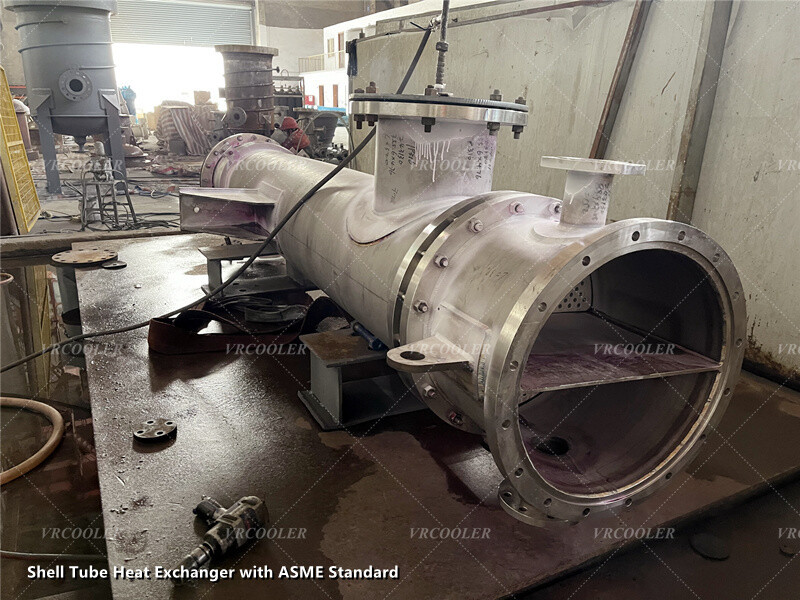
In a typical turbine guide bearing oil cooler, cooling water flows inside the tubes, while hot lubricating oil flows around the outside of the tubes on the shell side. This arrangement is practical because the water side is usually more prone to scaling, sediment, or fouling, especially when river water, lake water, or plant cooling water is used. Keeping the cooling water inside the tubes makes cleaning easier by brushing, flushing, or chemical cleaning.
Another important advantage is mechanical strength. Shell and tube heat exchangers can withstand pressure, vibration, temperature changes, and long-term industrial service. This makes them suitable for hydroelectric power stations, thermal power plants, and large turbine lubrication systems where equipment reliability is very important.
Shell and tube design also allows flexible material selection. Depending on the cooling water quality, the tubes can be made from copper, brass, stainless steel, copper-nickel, titanium, or duplex stainless steel. For clean freshwater systems, copper or stainless steel tubes may be enough. For river water, seawater, or corrosive water, Cu-Ni, titanium, or duplex stainless steel can be selected for better corrosion resistance.
Maintenance is another reason this design is widely used. The cooler can be designed with a removable tube bundle, allowing the tube bundle to be pulled out for inspection, cleaning, repair, or replacement. For power plants, this is very useful because maintenance time must be controlled and equipment downtime should be minimized.
In simple terms, shell and tube design is suitable for turbine guide bearing oil cooling because it offers stable heat transfer, high mechanical reliability, easy tube-side cleaning, flexible material options, and long service life. It is a practical and proven solution for keeping turbine bearing oil at the correct operating temperature.
