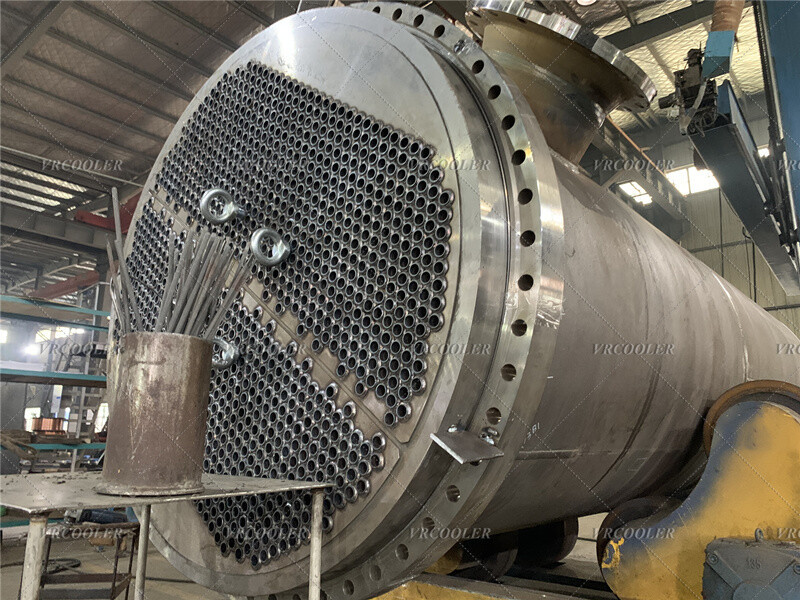
Does the Shell & Tube Heat Exchanger's Installation Position and Method Have an Impact on its Working Effectiveness?
The position and manner of installation of a shell and tube heat exchanger has a significant impact on its working effectiveness, as shown below:
Height
The mounting height affects the fluid flow and pressure distribution. If the mounting position is too high, it may lead to insufficient pressure when the fluid enters the heat exchanger, affecting the flow rate and heat transfer effect; if it is too low, it may increase the load of the pump.
For example, in an air conditioning system, an inappropriate condenser mounting height may result in poor refrigerant circulation and reduced cooling efficiency.
Surroundings
Installation in a well-ventilated location helps to dissipate heat and improve heat exchange efficiency. If the ambient temperature is too high or the ventilation is poor, the heat dissipation of the heat exchanger will be limited and the performance will be affected.
Special attention needs to be paid to provide adequate ventilation for the shell and tube heat exchanger, as in some closed rooms.
Relative position to other equipment
The distance and connection to upstream and downstream equipment affects the resistance to fluid flow and pressure balance. Excessively long or curved connection pipework increases the pressure drop and reduces the flow rate.
For example, in an industrial cooling system, the relative position of the heat exchanger to the cooling tower and the equipment being cooled will affect the operating efficiency of the entire system.
Installation method (horizontal or vertical)
When installed horizontally, care should be taken to ensure uniform fluid distribution and avoid bias flow. When installing vertically, the influence of gravity on fluid flow should be considered.
In some special working conditions, vertical installation may be more conducive to natural fluid circulation and heat transfer.
Support and fixing
Solid support and correct fixing can prevent vibration and displacement of the heat exchanger during operation, thus ensuring stable sealing performance and heat transfer.