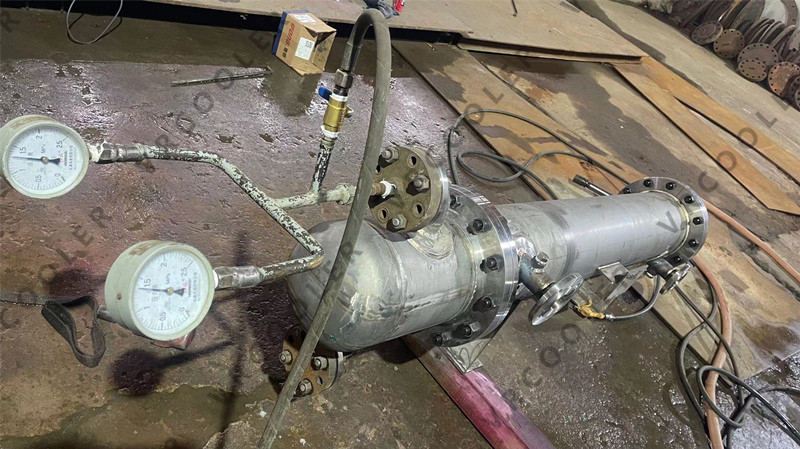
Factors Affecting the Heat Exchange Efficiency of Shell and Tube Evaporator
Shell and tube evaporator heat transfer efficiency will be affected by the following factors:
Refrigerant Characteristics
Refrigerant type: different refrigerants have different physical properties, such as latent heat of evaporation, thermal conductivity and so on. For example, some new environmentally friendly refrigerants may have differences in heat transfer efficiency compared to traditional R22.
Refrigerant mass flow rate: The flow rate of refrigerant will directly affect the heat transfer effect. When the flow rate is too low, can not fully take away the heat, heat transfer efficiency is reduced; while the flow rate is too high may lead to increased pressure loss, not necessarily improve the heat transfer efficiency. Generally there is an optimal range of refrigerant flow rate, so that the heat transfer efficiency is the highest.
Heat Exchanger Tube Characteristics
Heat exchanger tube material: different materials of heat exchanger tube thermal conductivity. For example, copper heat exchanger tube has a high thermal conductivity, which is conducive to improving the heat transfer efficiency; while the stainless steel heat exchanger tube has better corrosion resistance, but the thermal conductivity is relatively low.
Heat exchanger tube size and shape: heat exchanger tube diameter, length, wall thickness, as well as shape (such as light tube, bellows, finned tube, etc.) will affect the heat transfer area and fluid flow state, thereby affecting the heat transfer efficiency. Generally speaking, increasing the surface area of the heat exchanger tube can improve the heat transfer efficiency, but at the same time will also increase the flow resistance.
Heat exchanger tube surface condition: heat exchanger tube surface finish, roughness, and whether or not there is a coating, etc. will also have an impact on the heat transfer efficiency. Smooth surface can reduce fluid flow resistance, but may not be conducive to the formation of turbulence, thus affecting the heat transfer; and rough surface or a special coating of the surface can promote the formation of turbulence, improve the efficiency of heat transfer, but also increase the flow resistance and the possibility of dirt deposition.
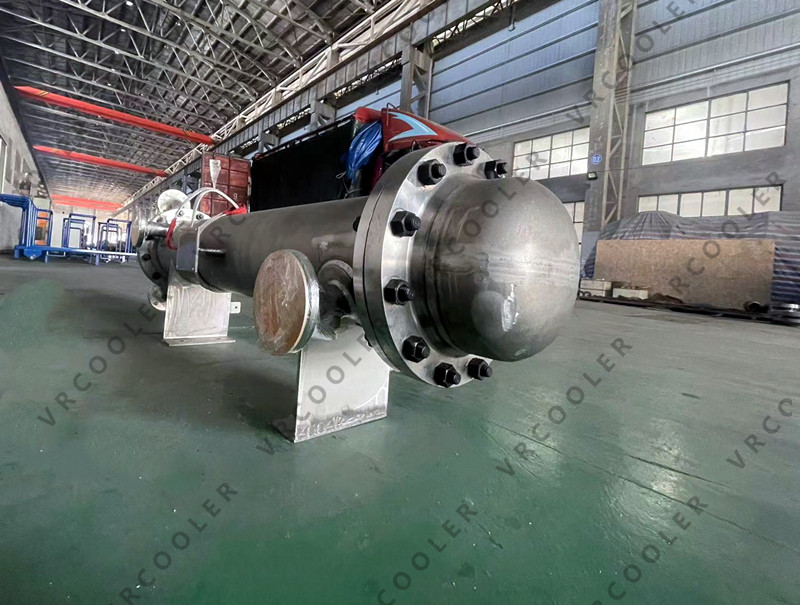
Water Side Characteristics
Water flow rate: the flow rate of water in the heat exchanger tube has an important impact on the heat transfer efficiency. Appropriate increase in water velocity can enhance the degree of turbulence, improve the heat transfer coefficient. But the flow rate is too high will lead to increased pressure loss, increase the pump energy consumption.
Water temperature and water quality: the lower the inlet water temperature, the greater the temperature difference between the heat transfer, which is conducive to improving the heat transfer efficiency. However, too low a water inlet temperature may lead to evaporator surface frost, affecting the heat transfer effect. In addition, the impurities and hardness of the water will affect the scaling of the heat exchange tube, and the scaling will reduce the heat exchange efficiency, so the water needs to be properly treated.
Operating Conditions
Evaporation temperature and pressure: the lower the evaporation temperature, the greater the heat transfer temperature difference, but at the same time, the evaporating pressure of the refrigerant will also be reduced, which may lead to the compressor suction pressure is too low, affecting the system performance. Therefore, it is necessary to operate within the appropriate evaporation temperature and pressure range to achieve optimum heat transfer efficiency.
Dirt and clogging: With the increase in operating time, impurities such as dirt and grease will accumulate on the surface of the heat exchanger tubes, or impurities in the water will clog the tubes, all of which will reduce heat transfer efficiency. Therefore, regular cleaning and maintenance is required.
System load change: when the system load changes, the heat load of the evaporator will also change. If the load change is too large or frequent, it may lead to the evaporator can not run in the best state, thus affecting the heat exchange efficiency.
Structural Design Factors
Shell and head design: the shape and size of the shell and the type of head will affect the fluid flow distribution and pressure loss. Reasonable design can make the fluid uniform distribution, reduce the flow dead zone, improve heat transfer efficiency.
Folding plate and support plate: The setting of folding plate and support plate can change the direction of fluid flow, increase the degree of turbulence and improve the efficiency of heat transfer. However, unreasonable settings may lead to increased flow resistance and local overheating.
Split-range arrangement: for large shell and tube evaporator, can adopt multi-range arrangement, in order to improve the heat transfer efficiency and reduce the size of the equipment. However, the split-range arrangement needs to be reasonably designed to avoid short-circuiting and uneven distribution of fluids.