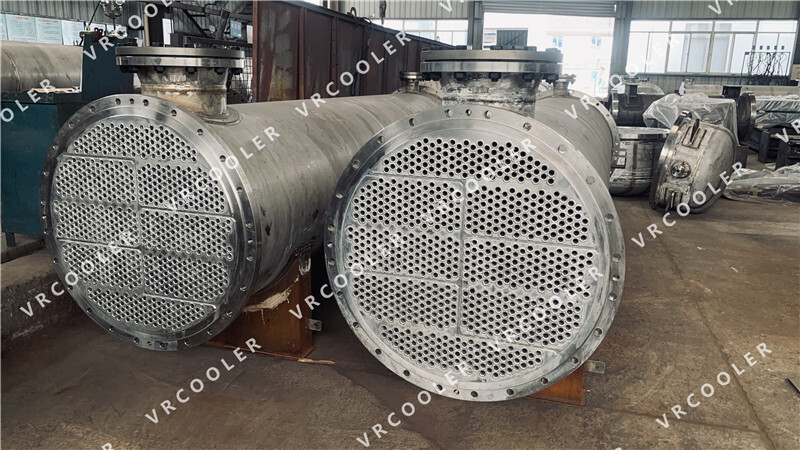
How do shell-and-tube heat exchangers differ from other heat exchanger types?
Shell-and-tube heat exchangers differ from other types in several ways:
Structure: They have a distinct shell and tube configuration, while other types may have different geometries or arrangements. For example, plate heat exchangers have a series of thin plates.
Heat transfer characteristics: Shell-and-tube exchangers often have a relatively stable and consistent heat transfer performance over a wide range of conditions, while some other types may show more variable behavior.
Pressure handling: They are typically capable of withstanding higher pressures compared to some other designs.
Fluid compatibility: Depending on the materials used, they may have different compatibilities with various fluids.
Size and space requirements: They tend to be bulkier and require more space compared to more compact types like plate heat exchangers.
Maintenance approach: The way maintenance is carried out, such as cleaning or replacing tubes, is different from other exchanger types.
Application suitability: Each type is better suited for different specific applications based on factors like fluid properties, temperature ranges, and heat transfer demands.
For instance, a plate heat exchanger might be preferred in a situation where a more compact design and high heat transfer rate in a limited space is crucial, while a shell-and-tube exchanger might be better for handling high pressures and a wider range of fluids in a larger industrial process.