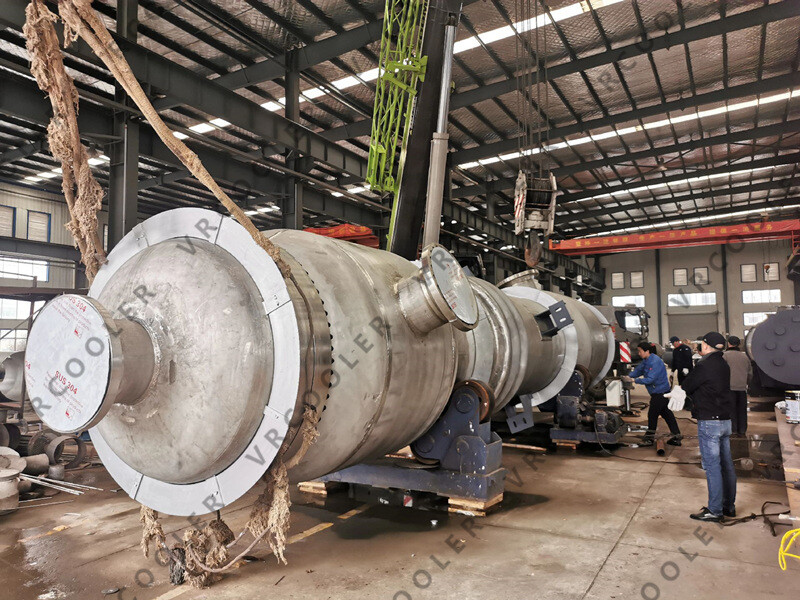
The shell and tube heat exchanger operates based on the principle of heat conduction and convection. Here's how it works:
The fluid that needs to be heated or cooled flows through the tubes. This is often called the tube-side fluid. At the same time, another fluid, known as the shell-side fluid, flows through the space around the tubes within the shell.
As the two fluids pass through the exchanger, heat is transferred from the hotter fluid to the cooler one. The heat transfer occurs mainly in three ways: conduction through the tube walls, convection within the fluids themselves, and convection between the fluids and the tube walls.
The tube bundle provides a large surface area for efficient heat exchange. The design and configuration of the tubes and the shell are optimized to enhance heat transfer and ensure good fluid flow.
For example, in a water-to-steam heat exchanger in a power plant, the water is heated by the hot steam flowing around the tubes. The heat from the steam is transferred to the water, causing it to vaporize.
In a chemical process, a hot process fluid might be used to heat a colder reactant flowing through the tubes to achieve the desired reaction temperature.
The flow rates and temperatures of the fluids are controlled to achieve the desired heat transfer and meet the specific requirements of the application. Different tube arrangements and shell geometries are used depending on the specific process conditions and heat transfer needs.