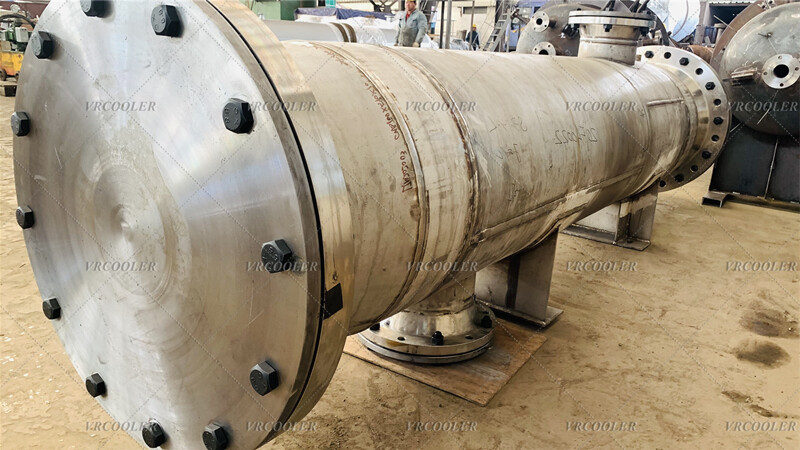
How to Avoid Fluid Leakage Problems in Shell and Tube Heat Exchangers?
The following measures can be taken to avoid fluid leakage problems in shell and tube heat exchangers:
High Quality Manufacturing and Installation
Ensure that the connection between the heat exchanger tubes and the tube sheet is strong and well sealed. Adopt advanced welding process, such as argon arc welding, and carry out strict welding quality inspection, such as ray detection and penetration detection.
The connection between tube plate and shell should also be installed precisely to ensure sealing.
Material Selection
Selection of suitable corrosion-resistant, high-temperature-resistant and pressure-resistant materials to make the various components of the heat exchanger. For example, in corrosive environments, use stainless steel or special alloys with good corrosion resistance.
Ensure the quality of the materials to avoid defects or inhomogeneities.
Regular Inspection and Maintenance
Establish a regular inspection programme, including visual inspections, pressure tests and non-destructive testing.
Detect and deal with corrosion, wear, cracks and other problems of heat exchanger tubes in time.
Control Operating Conditions
Avoid operating beyond the design pressure and temperature range of the heat exchanger.
Stabilise operation and reduce drastic fluctuations in pressure and temperature.
Selection and Maintenance of Seals
Select high-quality sealing gaskets, and choose the appropriate material and type according to the media characteristics and operating conditions.
Replace aged or damaged seals regularly.
Anti-vibration Measures
If there is a source of vibration, take vibration-damping measures, such as installing vibration-damping brackets or using flexible connections, to reduce the impact of vibration on the heat exchanger and to prevent seal failure and connection loosening caused by vibration.
Good Fluid Treatment
Filter and purify the fluid entering the heat exchanger to remove impurities that could damage the heat exchanger tubes and cause clogging.