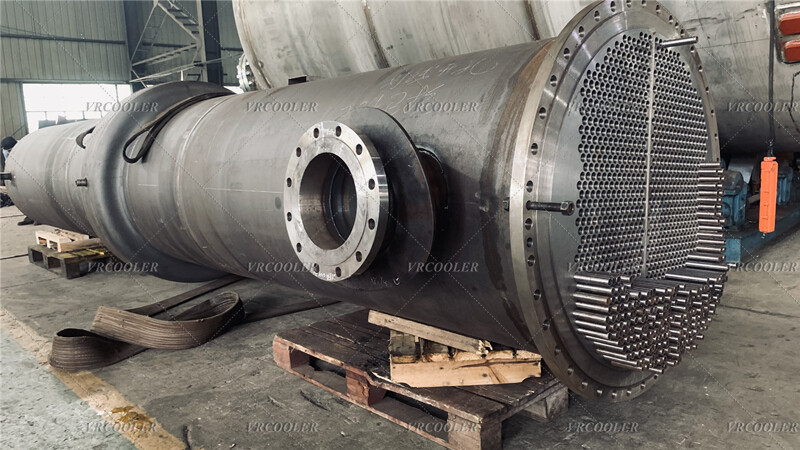
Determining the proper tube spacing and shell diameter for a shell and tube heat exchanger requires comprehensive consideration of a number of factors, the following are some common methods and points to consider:
Determination of tube spacing:
Fluid flow characteristics:
Tube spacing should be able to ensure that the fluid has a good flow state between the tubes, to avoid flow dead zones and excessive resistance. In general, a smaller tube spacing will increase the degree of turbulence of the fluid, thereby increasing the heat transfer coefficient, but also lead to increased pressure drop.
For more viscous fluids, larger tube spacings are usually required to reduce drag.
Heat Transfer Performance:
Tighter tube spacing can increase the heat transfer area and help improve heat transfer efficiency, but may restrict fluid flow and further increase heat transfer coefficients.
For applications requiring high heat transfer efficiency, smaller tube spacing may be preferred, balanced against increased pressure drop.
Cleaning and Maintenance:
Adequate tube spacing should facilitate mechanical cleaning and inspection to remove dirt and check the condition of the heat transfer tubes.
Common tube spacing values range from 1.25 times tube diameter to 4 times tube diameter.
Determination of shell diameter:
Fluid Flow:
Calculate the required cross-sectional area of circulation based on the shell and tube fluid flow rates. The shell diameter should be large enough to ensure proper flow rate of the fluid in the shell to avoid excessive pressure drop due to high flow rate or low flow rate affecting heat transfer.
Heat transfer requirements:
Consider heat transfer coefficient and heat transfer area requirements. Larger shell diameters can accommodate more heat transfer tubes and increase the heat transfer area, but may also reduce the flow rate and heat transfer coefficient of the fluid in the shell stroke.
Structural limitations and installation space:
Consider the overall structural strength of the equipment, the method of support, and the space limitations of the installation site.
Economic Factors:
Larger shell diameters increase the cost of the equipment, so an economic trade-off needs to be made while still meeting performance requirements.
Typically, the shell diameter needs to be determined through detailed thermal calculations and hydrodynamic analyses, combined with actual process conditions and economic considerations.
For example, in the design of a shell and tube heat exchanger for petrochemical industry, if the shell and tube fluid flow is large and high viscosity, may choose a larger shell diameter and a relatively large tube spacing to ensure smooth fluid flow and easy to clean; and for the space is limited but the heat transfer efficiency requirements of the application, may meet the requirements of the pressure drop on the premise of reducing the shell diameter and tube spacing as much as possible.