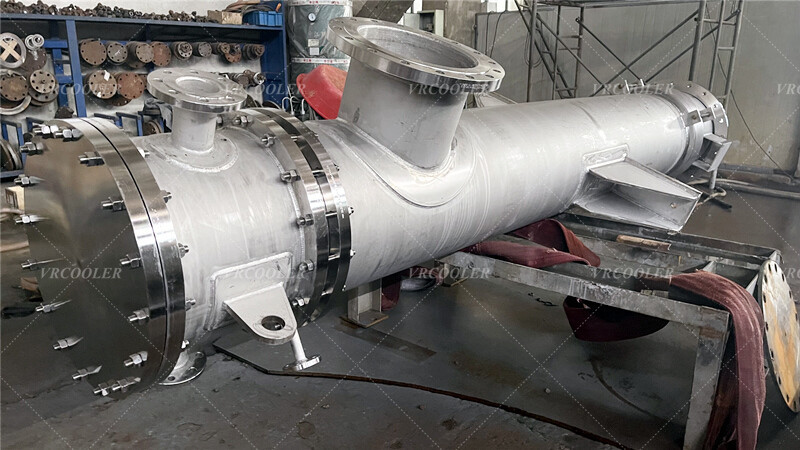
Large Shell and Tube Heat Exchangers as Seawater Condensers in Power Plants
The use of large shell and tube heat exchangers as seawater condensers in power plants has a number of important implications and features.
These heat exchangers are often very large in size to meet the large-scale cooling requirements of power plants. The shell and tube heat exchangers contain the seawater and the tubes circulate the medium to be cooled.
From the point of view of heat exchange efficiency, a well-designed tube bundle layout and shell flow path can achieve efficient heat transfer. For example, the use of densely arranged tube bundles and optimised seawater inlet and outlet arrangements can ensure that the seawater is in full contact with the tube bundles and rapidly removes heat.
In terms of material selection, in view of the strong corrosive properties of seawater, materials with excellent corrosion resistance, such as titanium alloys or specific stainless steel alloys, are often used. For example, some advanced power plants will use special titanium alloy heat exchanger, which in the process of long-term contact with seawater, can effectively resist corrosion and extend the service life of the equipment.
In addition, in order to ensure the stable operation of the equipment and reduce maintenance costs, large shell and tube heat exchangers are often equipped with advanced monitoring and control systems. These systems can monitor the operating parameters of the heat exchanger in real time, such as temperature, pressure, flow rate, etc., and issue timely alarms in the event of anomalies, so as to facilitate the operator to take measures.
For example, a large shell-and-tube seawater condenser used in a large coastal thermal power plant achieves efficient and stable cooling through precise design and high-quality materials, providing strong support for the continuous operation of the power plant. It can save the power plant a lot of money on maintenance and replacement of equipment every year, and at the same time improve the efficiency of power generation and guarantee the stable supply of electricity.