
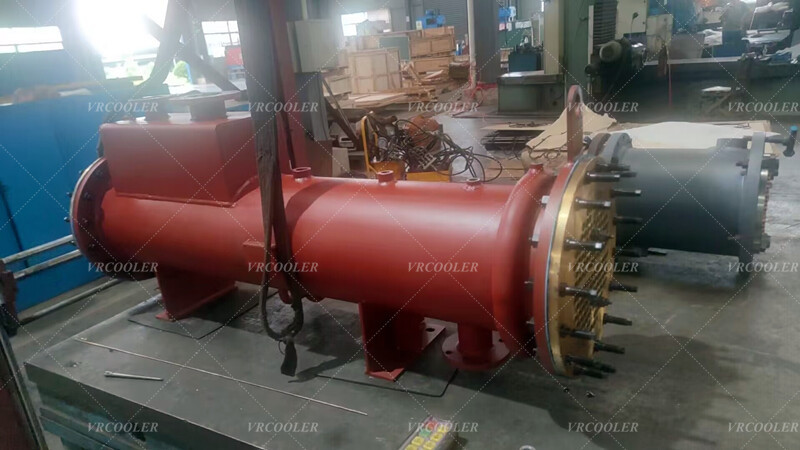
Steam passes through the shell stroke and heavy oil passes through the tube stroke. With the heat transfer from the steam, the temperature of the heavy oil increases, the viscosity decreases, and the fluidity increases, allowing it to be injected into the combustion system more efficiently.
Key Design Considerations:
Material Selection:
Tubes and housings are usually made of corrosion-resistant materials such as stainless steel, carbon steel, or even alloys to cope with the high temperature and high pressure environments of steam and heavy oil.
Tube bundle design:
Tube bundle design can generally choose parallel flow or cross flow to optimise heat transfer. Commonly used tube bundles are U-bundles or straight bundles.
Heat transfer area:
Due to the high viscosity and poor fluidity of heavy oil, the heat transfer area of the heat exchanger needs to be optimised according to the flow rate and the required heating temperature to ensure adequate heating effect.
Anti-scaling and cleaning:
Heavy oil is prone to impurities, which may lead to scaling or clogging in the tubes during long-term operation, so the heat exchanger is usually designed with a structure that facilitates cleaning and maintenance.
Safety:
Steam is heated at high pressures, so shell and tube heat exchangers need to be designed to meet pressure vessel standards to ensure safe operation.
Application Scenarios:
Marine engines:
Marine engines require the use of preheated heavy oil to allow for full combustion in the combustion chamber, increasing engine efficiency.
Paper Mills:
In paper drying systems, heavy oil is used as a fuel to heat the boiler and generate steam to supply the heat source for the drying process.
