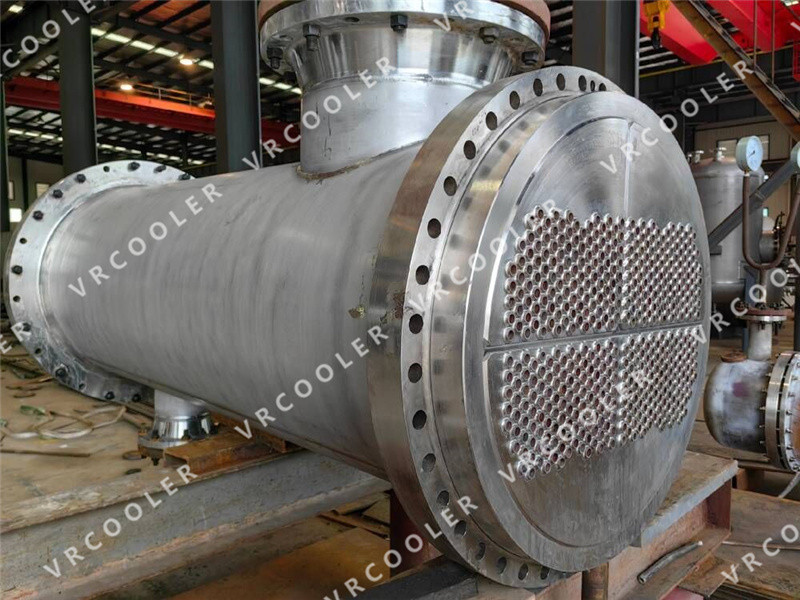
Shell and tube heat exchangers are commonly used in thermal power plants for various applications, including condensers, feedwater heaters, and oil coolers. Here's an overview of their use in a thermal power plant:
1. Condensers: In a thermal power plant, the condenser is a crucial component that converts steam from the turbine exhaust back into water. Shell and tube heat exchangers are widely used as condensers due to their high heat transfer efficiency. The steam flows through the tubes while cooling water circulates through the shell, facilitating the heat transfer process.
2. Feedwater Heaters: Feedwater heaters preheat the water before it enters the boiler, improving the overall thermal efficiency of the power plant. Shell and tube heat exchangers are commonly employed as feedwater heaters. The extracted steam from the turbine passes through the tubes, while the feedwater flows through the shell, allowing the transfer of heat from the steam to the feedwater.
3. Oil Coolers: Thermal power plants often have various lubrication and cooling systems that require oil cooling. Shell and tube heat exchangers can be utilized as oil coolers to dissipate heat from the oil. The hot oil flows through the tubes, while a cooling fluid, such as water or air, circulates through the shell, promoting heat transfer and maintaining the oil temperature within acceptable limits.
Advantages of Shell and Tube Heat Exchangers in Thermal Power Plants:
- High heat transfer efficiency due to the large surface area provided by the tube configuration.
- Versatility in design and customization to meet specific thermal requirements and operating conditions.
- Robust construction and durability, capable of withstanding high pressures and temperatures commonly encountered in thermal power plants.
- Easy access for maintenance and cleaning, as tubes can be removed or cleaned individually.
- Suitable for handling various fluids and capable of accommodating different flow rates.