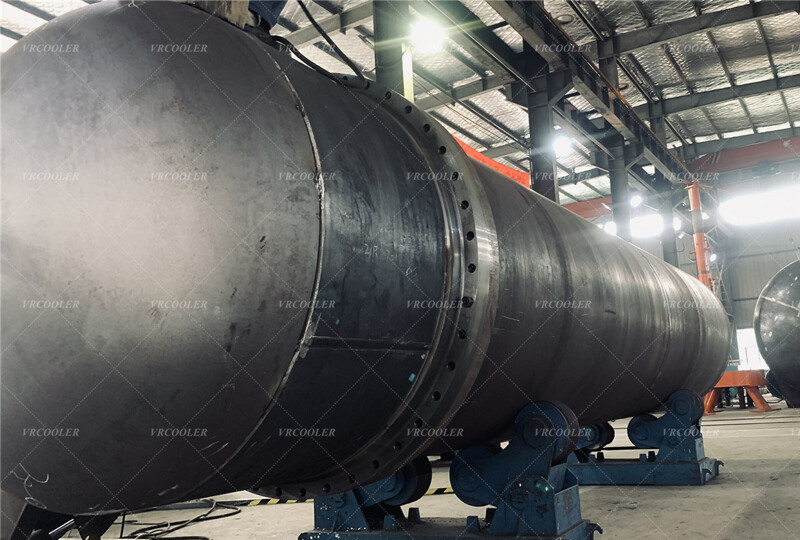
Shell and Tube Heat Exchangers on Offshore Platforms
On offshore platforms, shell and tube heat exchangers play a key role in cooling the various media used in oil and gas production.
These shell and tube heat exchangers usually have the following features and advantages:
High corrosion resistance: Due to the harshness of the marine environment and the chemical properties of the oil and gas media, the heat exchangers are manufactured with special corrosion-resistant materials, such as titanium alloy, duplex stainless steel, and so on. For example, duplex stainless steel is able to maintain good corrosion resistance in marine environments containing chloride ions, ensuring long-term stable operation of the heat exchanger.
High-efficiency heat exchange performance: In order to quickly and effectively cool the oil and gas medium, the heat exchanger is designed with optimised tube and shell structures, which increases the heat transfer area and improves the heat transfer coefficient. For example, the design of multiple tube and shell passes enables the medium to fully contact the heat transfer surface for efficient heat exchange.
Pressure and vibration resistance: Offshore oil extraction platforms are subject to vibration and pressure changes caused by waves, sea winds and other factors. Heat exchangers have excellent pressure and vibration resistance to withstand the dynamic loads of the platform. For example, by reinforcing the structural strength of the heat exchanger and adopting robust support and fixing methods, it is possible to ensure that no deformation or damage occurs under harsh operating conditions.
Compact design: Considering the limited space available on the platform, the heat exchanger is designed to be as compact as possible to save installation space. For example, the use of spiral tube type or compact shell and tube structure reduces the footprint of the equipment while meeting the heat exchange requirements.
Strict safety standards: Oil and gas extraction involves flammable and explosive media, and the heat exchangers follow strict safety codes and standards for design, manufacture and installation. It is equipped with perfect safety protection devices, such as safety valves, temperature and pressure sensors, to prevent dangerous situations such as over-temperature and over-pressure.
For example, on an offshore oil extraction platform, a specially designed shell-and-tube heat exchanger successfully cooled the high-temperature oil and gas medium to a safe temperature range, guaranteeing a smooth production process, while demonstrating reliable performance and low maintenance requirements over many years of operation.