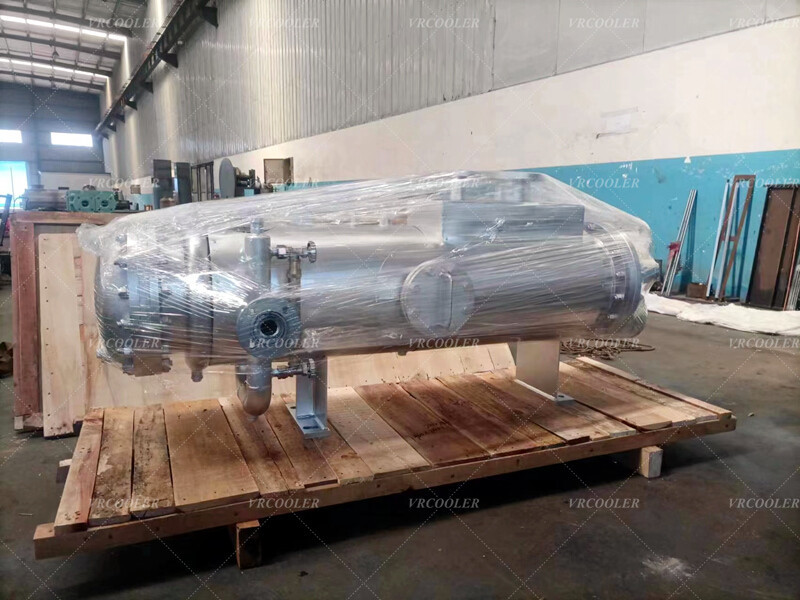
Shell and tube heat exchangers are often used to cool the main engine lubricating oil in large ships' power systems.
Shell and tube heat exchangers for cooling main engine lubricating oils are a common and effective configuration in the power systems of large ships.
These shell and tube heat exchangers have a number of advantages. Firstly, they are robust enough to withstand the vibrations and shocks of ship operation. For example, in rough sea conditions, the ship is subjected to severe turbulence, but the shell and tube heat exchanger can still maintain a stable working condition.
In terms of heat exchange performance, efficient heat transfer can be achieved by rationally designing the fluid flow paths in the tube and shell processes. For example, increasing the number of tube bundles and optimising the tube diameter and spacing can improve the cooling effect.
The choice of materials is also crucial. Due to the corrosive nature of seawater, titanium alloys or special corrosion-resistant stainless steels are often chosen for parts that come into contact with seawater, while parts that come into contact with lubricating oils may be made of alloy steels that are resistant to high temperatures and pressures.
In addition, shell and tube heat exchangers are easy to maintain and overhaul. It can be cleaned, inspected and damaged parts replaced more easily during regular maintenance of the ship.
For example, in the power system of a large container ship, the shell and tube heat exchanger equipped with careful maintenance has always maintained excellent cooling performance during many years of voyage, providing reliable cooling guarantee for the lubricating oil of the main engine, thus ensuring the stable operation of the ship's power system, and guaranteeing the smooth voyage of the ship and the on-time transport of goods.