
What are the Advantages and Applicable Scenarios of Multi-Process Shell & Tube Heat Exchangers?
Multi-process shell and tube heat exchangers have the following advantages:
Improvement of heat transfer efficiency: By increasing the number of processes of the fluid in the heat exchanger, it passes through the tube bundle several times, which increases the time and contact area of heat transfer, thus improving the heat transfer efficiency.
Better control of temperature: the temperature of the outlet fluid can be controlled more accurately to meet the strict requirements of the process on temperature.
Adaptation to large temperature difference: it can better cope with the large temperature difference between tube and shell fluids and reduce thermal stress.
Flexible design: according to specific process requirements and working conditions, the number of tube and shell processes, tube arrangement, length and diameter can be adjusted to optimise heat transfer performance and adapt to different flow rates, pressures and other requirements.
Strong resistance to thermal shock: it has strong resistance to thermal shock and can operate stably under working conditions with large temperature changes.
Smaller pressure loss: the pressure loss can be controlled in a small range, reducing the energy demand for the pumped fluid.
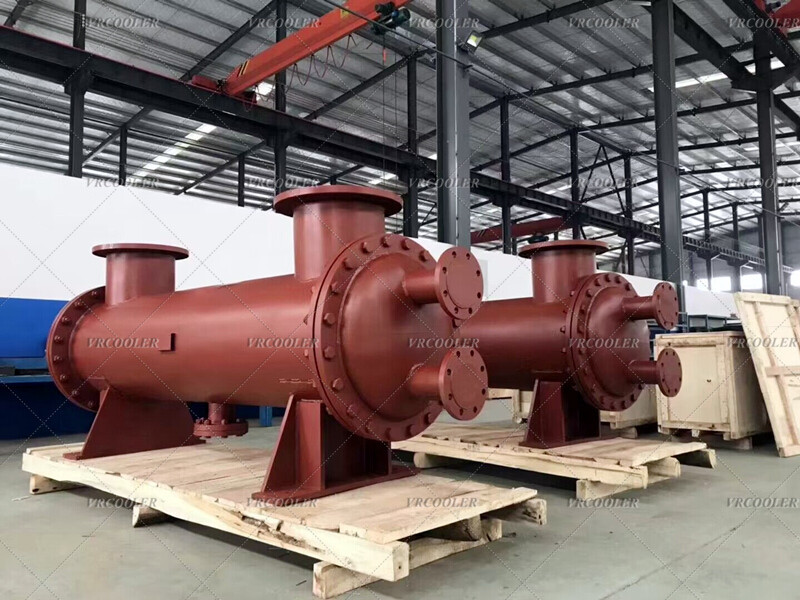
Multi-process shell and tube heat exchangers are used in a wide range of scenarios, commonly including:
Chemical industry: for heating, cooling, condensation, evaporation and other processes in various chemical processes, such as synthesis, separation and purification of chemical products.
Petrochemical industry: such as crude oil processing, oil distillation, gas separation and so on.
Air-conditioning and refrigeration systems: heat exchange in central air-conditioning systems, refrigeration and freezing equipment.
Power industry: e.g. heat circulation systems in power plants.
Food and beverage processing: temperature control in milk sterilisation, food cooking, beverage blending, etc.
Pharmaceutical industry: Various temperature control aspects involved in the production of pharmaceuticals.
Centralised heating systems: for the heating and delivery of hot water.
Industrial manufacturing: to meet the demand for heat exchange between different fluids in a variety of industrial production processes.
