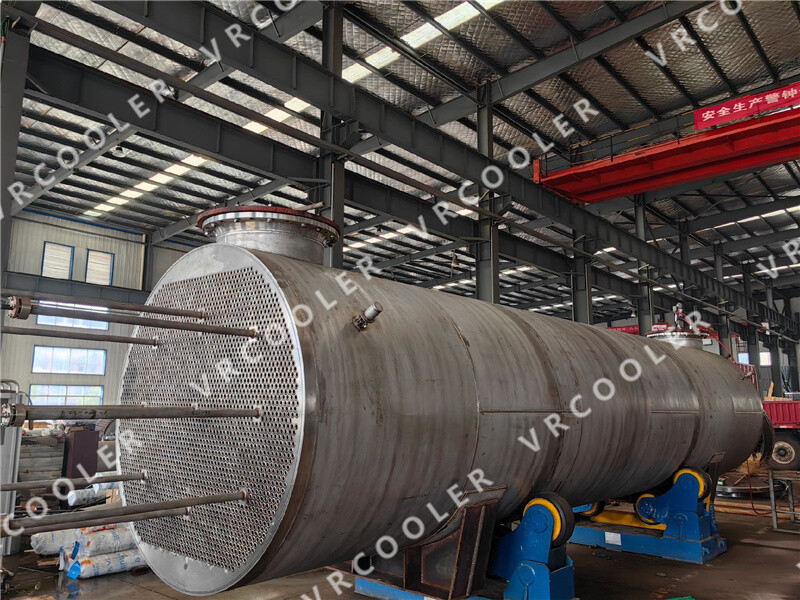
What are the common causes of damage to shell and tube heat exchangers?
Some common causes of damage to shell and tube heat exchangers include:
Corrosion: Due to the chemical nature of the fluids, which can eat away at the metal over time.
Fouling: Buildup of deposits such as scale, sludge, or dirt on the tubes or inside the exchanger, reducing heat transfer efficiency and potentially causing mechanical damage.
Mechanical stress: From high pressures, vibrations, or improper handling during installation or operation.
Thermal shock: Rapid changes in temperature that can cause cracking or warping.
Poor fluid compatibility: Incorrect fluids being used that may react with the materials of the exchanger.
Leaks in gaskets: Leading to fluid leakage and potential damage to surrounding components.
Overheating: Excessive heat can cause degradation of materials and affect the integrity of the exchanger.
Impact damage: From external forces or objects hitting the exchanger.
Improper maintenance: Lack of timely cleaning, inspection, or repair can result in cumulative damage.
Design flaws: Such as insufficient tube thickness or improper tube layout.