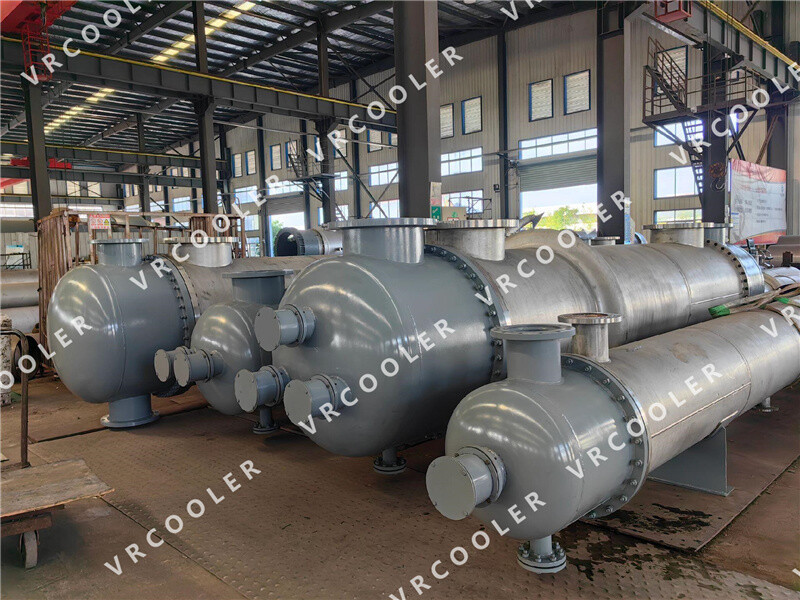
What are the common tube and shell materials for shell-and-tube heat exchangers used in chemical processing?
Some common tube and shell materials for shell-and-tube heat exchangers used in chemical processing include:
Stainless steel: Such as 304 or 316, offers good corrosion resistance.
Titanium: Highly resistant to corrosion, especially in aggressive environments.
Nickel alloys: Like Inconel or Monel, suitable for high-temperature and corrosive conditions.
Copper alloys: For certain applications where copper's properties are beneficial.
Carbon steel: Can be used in less corrosive situations and is often more cost-effective.
Alloys based on chromium and molybdenum: Provide enhanced strength and corrosion resistance.
Duplex stainless steel: Combines good mechanical properties and corrosion resistance.
For example, in a chemical process involving highly corrosive acids, titanium tubes and a stainless steel shell might be used.
Or in a high-temperature and corrosive environment, a nickel alloy could be the preferred choice for both tubes and shell.