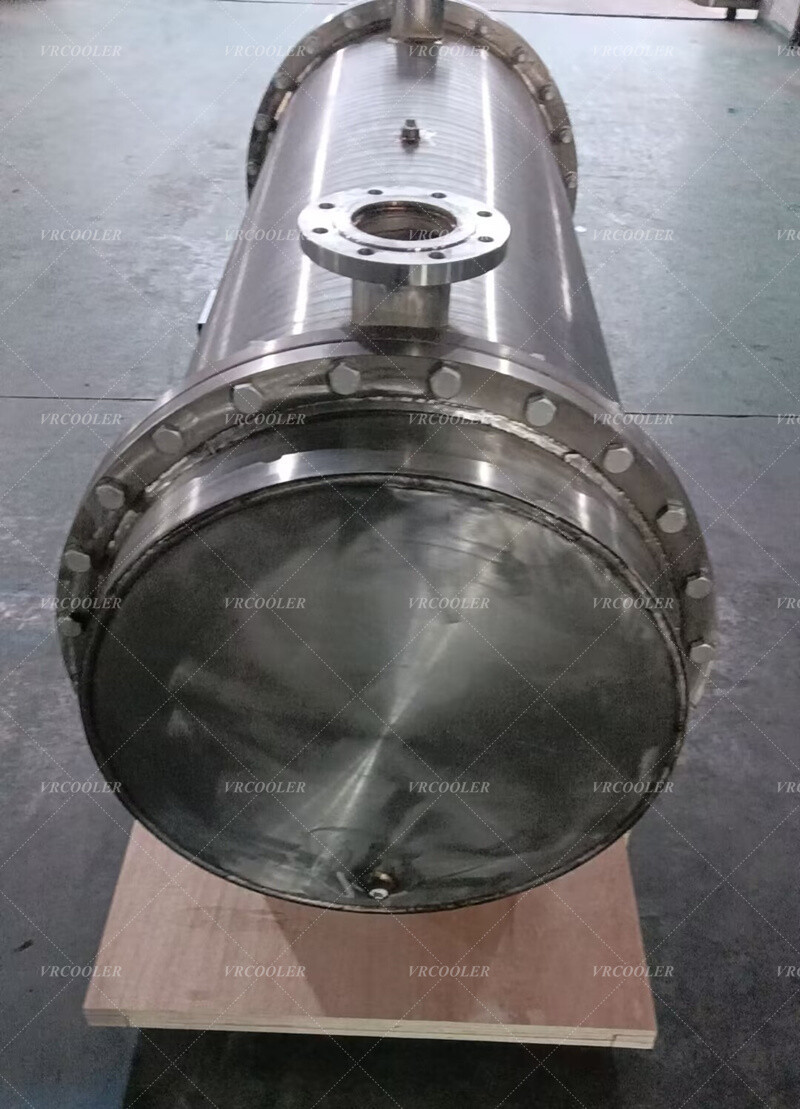
What are the Differences in Corrosion Resistance between Shell & Tube Heat Exchangers Made of Different Materials?
There are significant differences in the corrosion resistance of shell and tube heat exchangers made of different materials, the following are the characteristics of some common materials:
1. stainless steel:
It has good corrosion resistance and is resistant to a wide range of acids, alkalis and salt solutions.
Stainless steels 304 and 316, for example, perform well in general chemical environments, but may still corrode in certain highly corrosive media.
2. Titanium:
Extremely resistant to corrosion, with good resistance to most strong acids, bases and chloride solutions.
Commonly used in the treatment of media containing a high concentration of chloride ions, such as seawater desalination and other fields.
3. copper:
Has some resistance to non-oxidising acids, but corrodes easily in oxidising environments.
Commonly used in some of the requirements of high thermal conductivity, and the medium is relatively weak corrosive occasions.
4. carbon steel:
Relatively poor corrosion resistance, easy to oxidation and acid, alkali erosion.
Usually need to carry out anti-corrosion treatment, such as coating or lining.
5. nickel-based alloy:
Excellent corrosion resistance in high temperature, high concentration of strong acid and alkali environment.
However, they are costly and commonly used in extremely harsh working conditions.
For example, in chemical production, if the medium is a strong acid and high temperature, the use of stainless steel heat exchanger may be corrosion, and the choice of nickel-based alloys can better cope with such harsh conditions. In seawater cooling systems, where seawater contains large amounts of chloride ions, shell and tube heat exchangers made of titanium can effectively resist corrosion, whereas copper may corrode more quickly.