
Shell and tube heat exchangers are widely used in various industries for transferring heat between two fluids. They consist of a shell (or outer vessel) and a bundle of tubes housed within the shell. The two fluids, commonly known as the "hot fluid" and the "cold fluid," flow through the shell and the tubes, respectively.
The primary purpose of shell and tube heat exchangers is to facilitate the efficient transfer of heat from one fluid to another. This process is achieved through a combination of conduction, convection, and sometimes radiation.
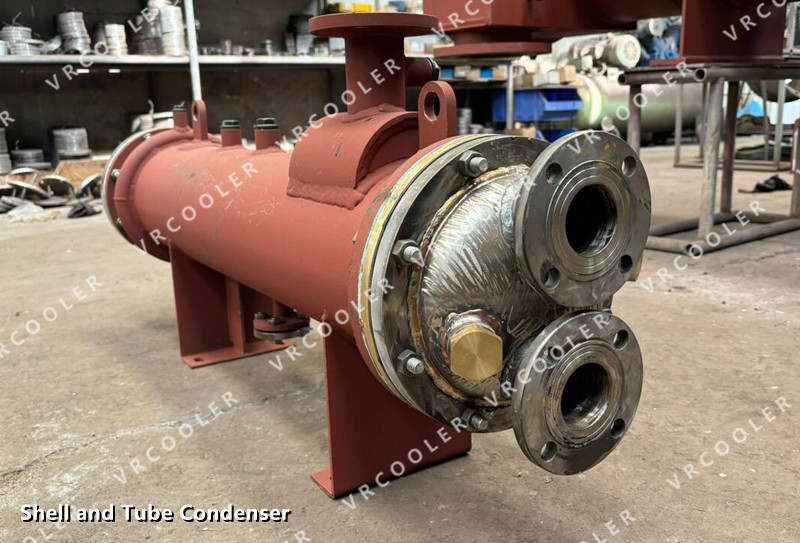
Shell and tube heat exchangers offer several advantages:
High Heat Transfer Efficiency: The design of shell and tube heat exchangers allows for a large surface area contact between the hot and cold fluids, enhancing heat transfer efficiency.
Versatility: These heat exchangers can handle a wide range of operating conditions, pressures, and temperatures. They are suitable for both high and low-pressure applications and can handle both corrosive and non-corrosive fluids.
Scalability: Shell and tube heat exchangers are available in various sizes, allowing for scalability and customization based on specific process requirements.
Easy Maintenance: The tube bundles in shell and tube heat exchangers can be easily removed for cleaning or replacement, making maintenance relatively straightforward.
Durability: Shell and tube heat exchangers are typically constructed using materials that offer good corrosion resistance and mechanical strength, ensuring durability and longevity.
Shell and tube heat exchangers find applications in numerous industries, including power generation, chemical processing, oil and gas, refrigeration and air conditioning, food and beverage, and many others. They are used for processes such as heating or cooling fluids, condensing vapors, and recovering waste heat.
