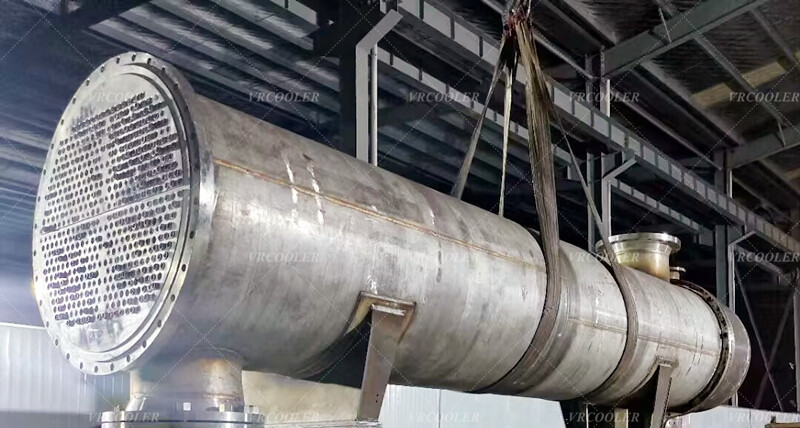
A shell-and-tube heat exchanger using steam to heat fresh water is a widely used thermal equipment that transfers heat from high-temperature steam (hot fluid) to low-temperature fresh water (cold fluid) through a tube bundle. It leverages the high latent heat of steam condensation for efficient heat transfer, making it a staple in industries like power generation, HVAC, food processing, and manufacturing.
The system follows a simple heat transfer cycle, with steam and fresh water flowing in separate streams (no direct contact). The typical "fluid allocation" (which fluid flows where) is steam on the shell side, fresh water on the tube side—this setup maximizes efficiency and ease of maintenance.
Here’s the step-by-step process:
Steam Inlet & Condensation:
High-pressure, saturated or superheated steam enters the shell through the steam inlet nozzle. As steam flows around the tube bundle (guided by baffles), it comes into contact with the cooler outer walls of the tubes. The steam loses heat and condenses into liquid water (condensate), releasing large amounts of latent heat (e.g., ~2257 kJ/kg for 1 atm steam—far more than the sensible heat of hot water).
Heat Transfer Through Tubes:
The latent heat from steam transfers through the tube walls (via conduction) to the cold fresh water flowing inside the tubes. The tube material (e.g., copper, stainless steel) is chosen for high thermal conductivity to minimize heat loss.
Fresh Water Heating:
Fresh water enters the inlet header, is distributed evenly into the tube bundle, and flows through the tubes. As it absorbs heat from the tube walls, its temperature rises to the target setpoint (e.g., 80°C for domestic hot water, 150°C for boiler feedwater). The heated water then collects in the outlet header and exits for use.
Condensate Removal:
The liquid condensate (now at steam saturation temperature) settles at the bottom of the shell (due to gravity). The condensate trap drains it to a recovery system (e.g., a hot well for reuse as boiler feedwater), ensuring the shell remains free of stagnant liquid.
Applications
Power Plants: Heating boiler feedwater (reduces fuel consumption by preheating water before it enters the boiler).
HVAC: Heating domestic hot water or hydronic heating systems (residential/commercial buildings).
Food & Beverage: Heating water for cleaning, cooking, or sterilization (uses food-grade materials like 316 stainless steel).
Industrial Processes: Heating process water for chemical manufacturing, pharmaceutical production, or textile dyeing.