
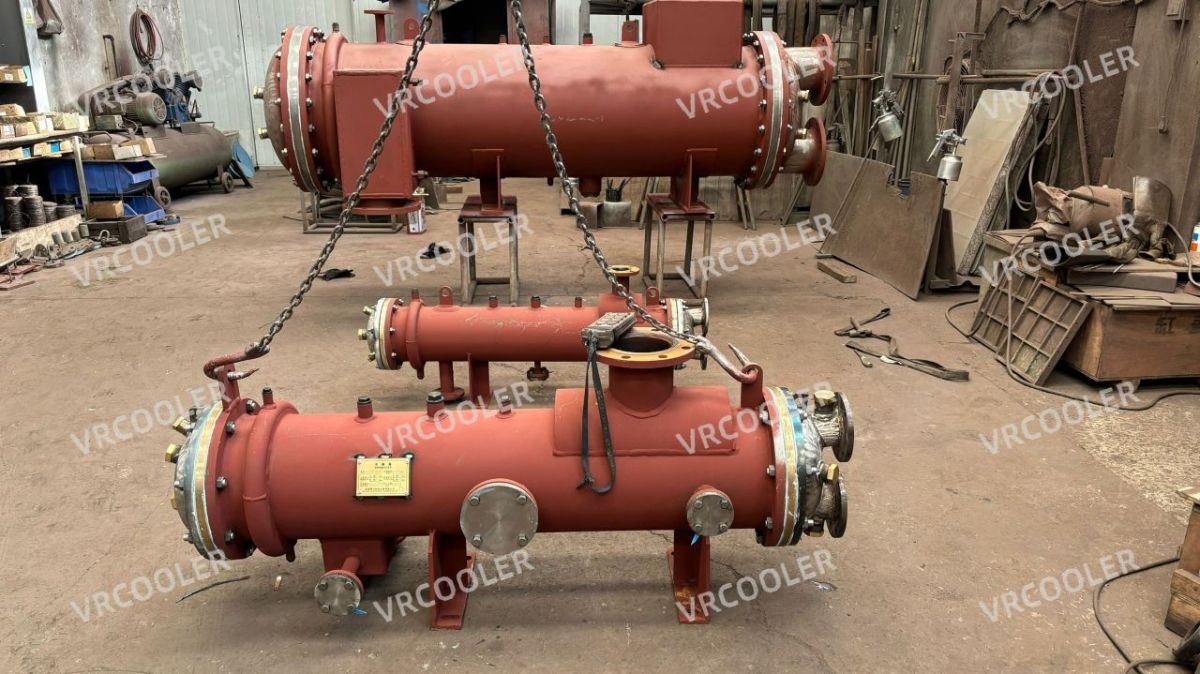
In marine and industrial refrigeration systems, shell and tube cargo condensers play a vital role in the liquefaction of ammonia gas using sea water as the cooling medium. These condensers are specifically engineered to handle corrosive seawater environments and the high-pressure, high-temperature conditions of ammonia condensation.
Working Principle
In a shell and tube cargo condenser, ammonia vapor enters the shell side, where it is condensed into a liquid by cooling sea water flowing through the tubes.
Hot ammonia vapor enters the top of the shell.
Cool seawater flows through the internal tube bundle, absorbing the latent heat of condensation.
The condensed ammonia collects at the bottom and is returned to the cargo tank or liquid receiver.
The warmed seawater is discharged overboard.
This indirect cooling method provides efficient heat transfer while keeping the ammonia and seawater circuits completely isolated for safety.
Applications
Marine ammonia cargo refrigeration systems
LPG/LNG carrier condensation systems
Ammonia-based industrial cooling plants
Coastal and offshore refrigeration installations
Maintenance and Operation
To ensure continuous reliability in marine conditions:
Regularly flush seawater passages with fresh water to prevent scale buildup.
Periodically inspect and clean tube bundles for deposits or fouling.
Monitor zinc or aluminum anodes and replace when necessary.
Maintain proper flow velocity to balance cooling efficiency and erosion protection.