How are Tube Bundles used in Heat Exchangers?
Fluid Flow Arrangement: The two fluids involved in the heat exchange process flow through the heat exchanger in specific patterns. One fluid flows through the inside of the tubes, while the other fluid flows over the outside of the tubes. This can be further divided into different flow arrangements, such as parallel - flow, counter - flow, and cross - flow. In parallel - flow, both fluids enter the heat exchanger at the same end and flow in the same direction. In counter - flow, the fluids enter at opposite ends and flow in opposite directions. Cross - flow occurs when the fluids flow perpendicular to each other. The choice of flow arrangement depends on the specific heat transfer requirements and the characteristics of the fluids.
Heat Transfer Mechanism: Heat is transferred from the hotter fluid to the colder fluid through the walls of the tubes. The tube material acts as a conductor, allowing the heat to pass from the inner fluid to the outer fluid. The rate of heat transfer depends on several factors, including the temperature difference between the two fluids, the thermal conductivity of the tube material, the surface area of the tubes, and the flow rates of the fluids. To enhance heat transfer, the tubes may be finned or have other surface modifications to increase the effective surface area.
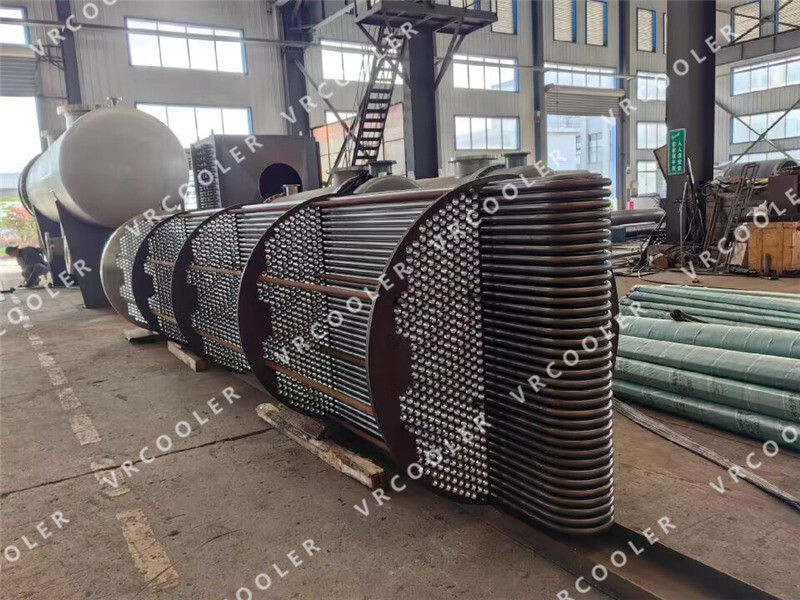
Tube Bundle Configuration: The tube bundle can be configured in different ways to optimize the heat transfer process. Common configurations include straight tubes, U - shaped tubes, and spiral - wound tubes. Straight tubes are simple and easy to install, but may require more space. U - shaped tubes are often used in applications where space is limited, as they can be arranged in a more compact manner. Spiral - wound tubes offer a large surface area in a relatively small space and can provide enhanced heat transfer due to the unique flow pattern of the fluids.
Shell and Tube Heat Exchangers: This is a common type of heat exchanger that uses a tube bundle. The tube bundle is housed inside a shell, and the two fluids are separated by the tube walls. The fluid flowing outside the tubes is contained within the shell, while the fluid flowing inside the tubes passes through the tube bundle. Baffles are often installed inside the shell to direct the flow of the shell - side fluid and increase its velocity, which improves heat transfer. The baffles also help to support the tubes and prevent them from vibrating due to fluid flow.
Maintenance and Cleaning: Tube bundles in heat exchangers require regular maintenance to ensure optimal performance. Over time, the tubes may become fouled with dirt, scale, or other deposits, which can reduce the heat transfer efficiency. Cleaning methods such as chemical cleaning, mechanical cleaning, or high - pressure water jetting may be used to remove these deposits. In addition, the tubes should be inspected for any signs of damage, such as cracks or leaks, and repaired or replaced as necessary.