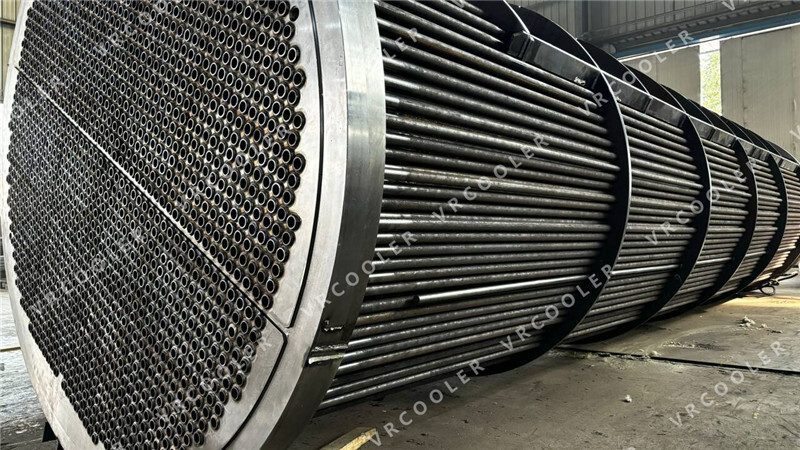
How to maintain shell and tube heat exchanger?
The following are the main steps for maintaining a shell and tube heat exchanger:
Regular inspection: Periodically check for leaks, corrosion, damage to tubes and shells, and any signs of abnormal wear.
Cleaning: Depending on the fouling situation, use appropriate methods such as chemical cleaning, mechanical cleaning (e.g., brushing), or high-pressure water jetting to remove deposits and contaminants.
Tube inspection and testing: Conduct non-destructive testing methods like eddy current testing or pressure testing to detect any damaged or weakened tubes.
Replace damaged tubes: When necessary, remove and replace damaged or leaking tubes.
Check gaskets: Ensure the gaskets are in good condition and replace them if they show signs of deterioration or leakage.
Flush the system: Periodically flush the exchanger to remove any accumulated debris or sediment.
Monitor fluid quality: Keep an eye on the quality of the fluids passing through to prevent excessive fouling or corrosion.
Lubricate moving parts (if applicable): Ensure smooth operation of any valves or other moving components.
Follow manufacturer's guidelines: Adhere to the specific maintenance recommendations provided by the exchanger manufacturer.
Record keeping: Keep detailed records of maintenance activities, inspections, and repairs for future reference and trend analysis.