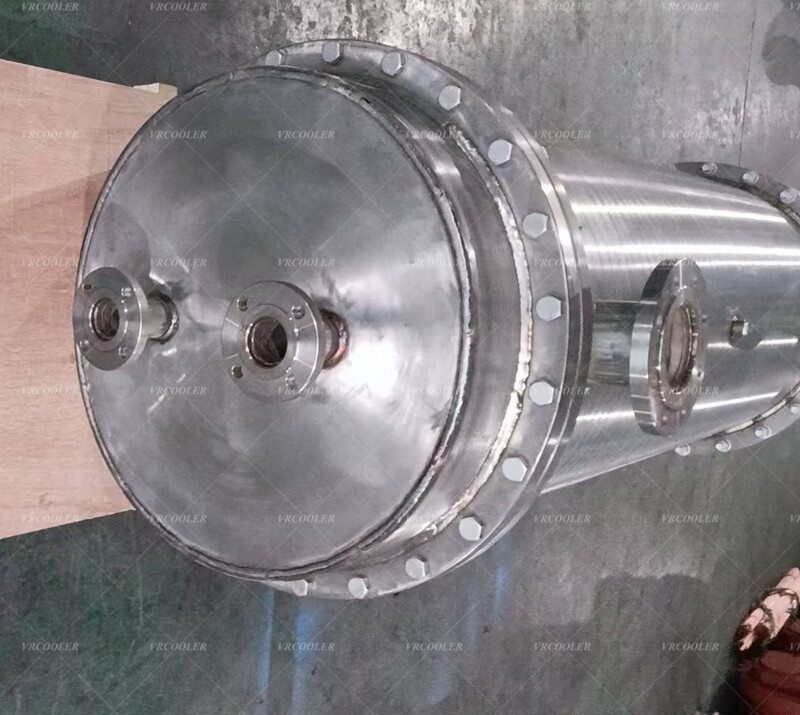
Shell Tube Evaporator for Steam Boiler
A shell tube evaporator for a steam boiler is a type of heat exchanger used to convert water into steam by transferring heat from the combustion gases or other heat sources. B
Key Components
Shell: The outer casing that contains the tubes and the fluid to be heated (usually water).
Tubes: A series of tubes running through the shell, where heat transfer occurs. The steam or other heating medium flows inside these tubes.
Inlet and Outlet Connections: Pipes that allow water to enter and steam to exit the evaporator.
Baffles: Structures inside the shell that direct the flow of the fluid, enhancing the heat transfer efficiency.
Insulation: Thermal insulation around the shell to minimize heat loss.
Working Principle
Heat Transfer: Hot gases from the boiler pass over the shell, transferring heat to the water in the tubes.
Evaporation: As the water absorbs heat, it begins to evaporate and forms steam.
Steam Collection: The produced steam is collected at the top of the shell and directed to the steam system for use.
Condensate Removal: Any unconverted water (condensate) is drained from the bottom of the shell.
Advantages
High Efficiency: Provides efficient heat transfer, maximizing steam production.
Compact Design: Typically smaller and more efficient than other types of evaporators.
Versatility: Suitable for various applications, including industrial processes and power generation.
Ease of Maintenance: Tubes can be cleaned and inspected relatively easily compared to other evaporator designs.