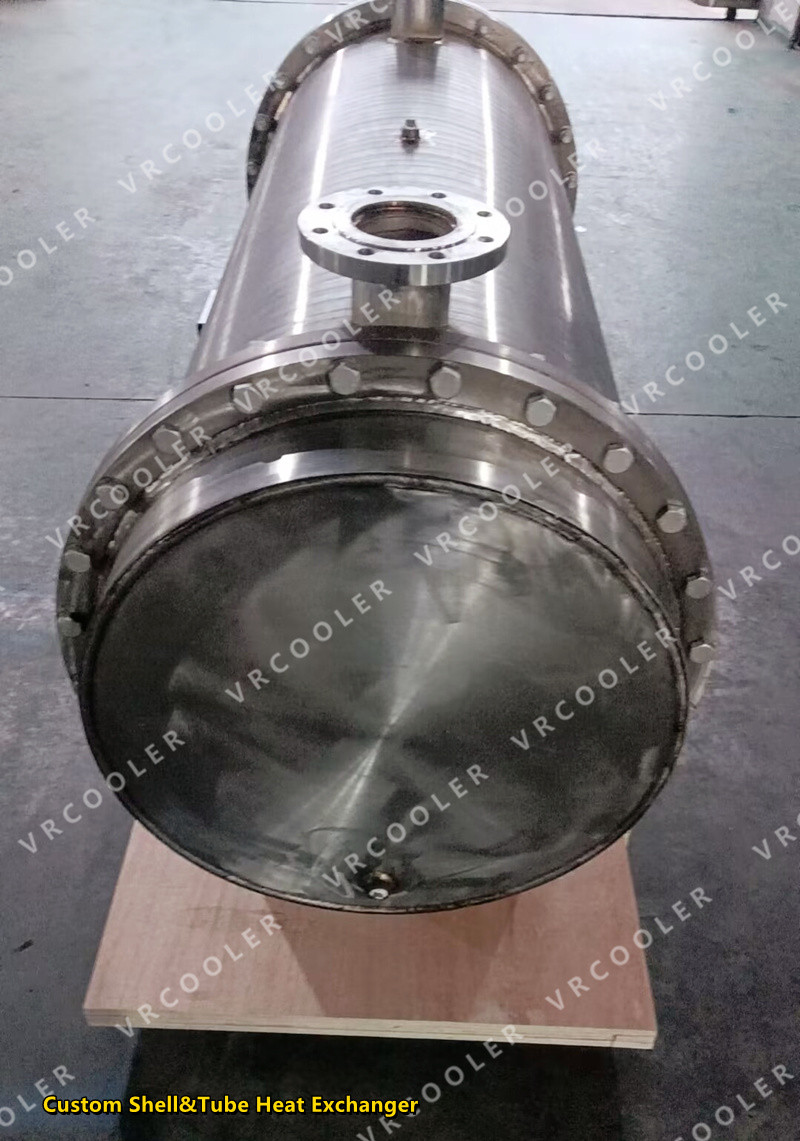
Shell and Tube Heat Exchanger Structure and Manufacturing Standards
Generally speaking, shell and tube heat exchanger is easy to manufacture, low production cost, wide range of selected materials, easy to clean, adaptable, large processing capacity, reliable, and can adapt to high temperature and high pressure. Although it can not be compared with plate and plate-fin heat exchanger in terms of compactness, lightness of heat transfer and unit metal consumption, it is still in a dominant position in the application of chemical industry, petroleum energy and other industries because it has some advantages as mentioned before.
Shell and tube heat exchanger is to connect the tube with the tube plate, and then fixed with the shell. Its type is roughly divided into fixed tube and plate type, kettle floating head type, U-tube type, sliding tube and plate type, stuffing box type and casing type, etc., which we briefly introduced earlier. According to the type of medium, pressure, temperature, dirt and other conditions, tube and shell connection of various structural features, the shape of the heat transfer tube and heat transfer conditions, cost, maintenance and inspection of the convenience of choosing the design and manufacture of a variety of shell and tube heat exchanger.
Shell and tube heat exchanger manufacturing standards
Shell and tube heat exchanger: closed in the shell of the wall of the tube bundle as the heat transfer surface of the wall heat exchanger, this heat exchanger structure is relatively simple, reliable operation, available in a variety of structural materials (mainly metal materials) manufacturing, can be used at high temperatures, high pressures, is currently the most widely used type. (Designed and manufactured in accordance with the standards: TEMA ASME)