
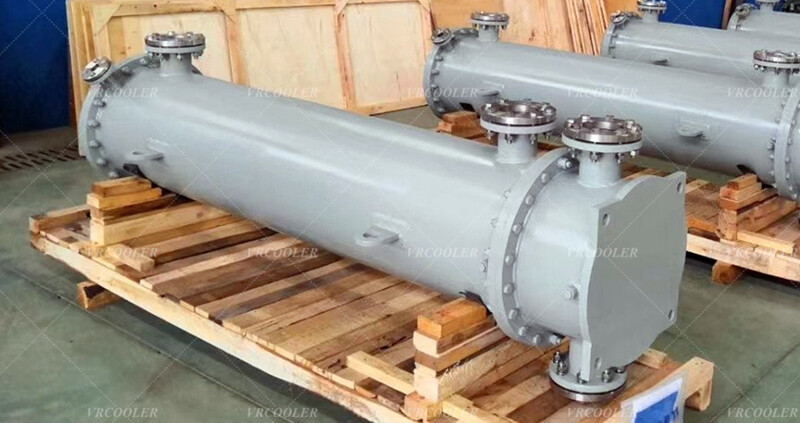
Shell and tube heat exchanger for paper drying
The purpose is to heat heavy oil with steam and then the heavy oil goes to the oil boiler.
In the paper drying process, the Shell & Tube Heat Exchanger is used to heat heavy oil with steam and then transfer the high temperature heavy oil to an oil-fired boiler to provide a stable heat source for the drying process.
Core Purpose
Indirect heating of the drying system:
The high viscosity of heavy oil (especially at low temperatures) is heated by steam to 90-120°C. After reducing the viscosity, the oil is pumped to an oil-fired boiler for combustion, generating high-temperature hot air or steam for paper drying.
Energy efficiency optimization:
Utilize the waste heat of steam (e.g. from the waste heat boiler of the paper mill or the main steam pipe network) to heat the heavy oil, reducing the energy consumption of direct electric heating.
Typical Workflow
Steam source (waste heat boiler/network) → shell and tube heat exchanger (shell side)
Heavy oil storage tank → preheater (initial heating) → shell and tube heat exchanger (tube side) → fuel oil boiler → drying drum/hot air system
Condensate Recovery: The steam condensate after heat exchange can be returned to the boiler for recycling.
Key design of shell and tube heat exchanger
1. Structure adapted to the needs of the paper-making process
Shell side (steam): Saturated steam (pressure typically 4-10 bar, temperature 150-180°C) is used to ensure fast heat transfer.
Tube side (heavy oil): High thermal conductivity and corrosion resistant tubes (e.g. 316L stainless steel) are used to prevent corrosion from sulfur in the heavy oil.
Folding plate: Increase the shell side of the steam turbulence, improve heat transfer efficiency (folding plate spacing needs to be optimized to avoid excessive pressure drop).
Insulation: Shell wrapped with insulation materials (such as rock wool) to reduce heat loss.
2. Special design considerations
Anti-coking design:
Heavy oil flow rate needs to be >1.5 m/s to avoid low-speed stagnation leading to coking in the pipe.
Multiple pipe lengths (e.g. U-tubes) can be designed to extend the flow path to improve heat exchange efficiency.
Precise temperature control:
Temperature sensor + electric control valve at the heavy oil outlet, linked to the steam flow rate, to maintain a stable oil temperature (±2°C).
Paper Drying System Integration
1. Synergy with oil-fired boilers
High temperature heavy oil combustion:
Reduced viscosity of heated heavy oil (approx. 20-50 cSt), improved atomization, and 10-15% increase in boiler combustion efficiency.
Hot air/steam generation:
The high temperature hot air (200-300°C) generated by the boiler is used directly for drying the paper, or steam is generated to drive the drying drum.
2. Steam source optimization
Waste heat utilization:
If the paper mill has alkali recovery boiler or cogeneration system, it can prioritize the use of its low-pressure steam to heat heavy oil and reduce the comprehensive energy consumption.
Backup steam source:
The main steam pipe network is used as a backup to ensure uninterrupted operation of the drying line.
Case reference
A mill with an annual capacity of 500,000 tons of pulp uses 2 shell and tube heat exchangers (120 m² heat transfer area per unit):
Steam consumption: ~500 kg/h (pressure 6 bar) to heat heavy oil up to 110°C.
Energy saving effect: annual energy cost savings of about 2 million dollars compared to electric heating.
For specific parameter calculations (e.g. heat transfer area, steam consumption), the following data can be provided:
Heavy oil flow rate (kg/h)
Initial/target temperature (°C)
Available steam pressure (bar)