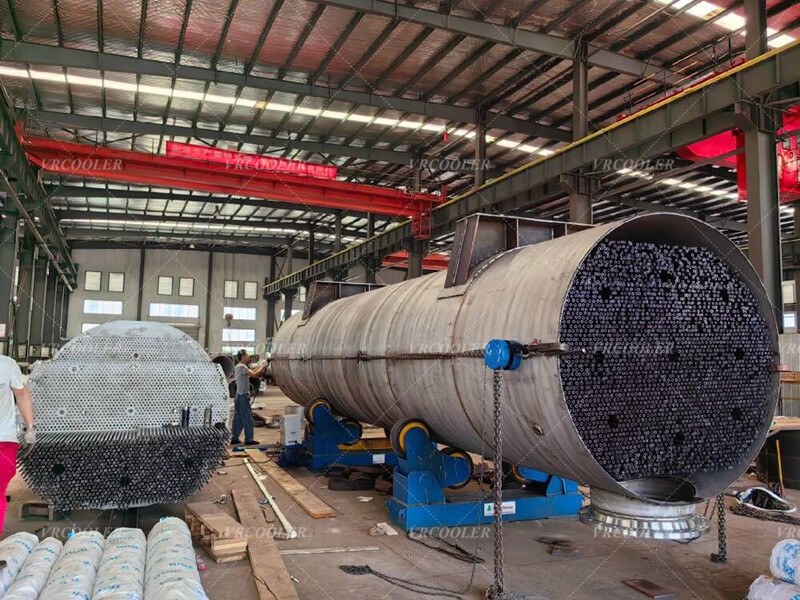
Tubular Heat Exchanger Application in Iron and Steel Industry
Blast Furnace System
Hot Blast Stove
In a blast furnace, hot blast stoves are used to heat the air before it enters the furnace. Tubular heat exchangers are often employed to pre - heat the combustion air for the hot blast stoves. The waste gas from the blast furnace, which still contains a significant amount of heat, passes through the tubes of the heat exchanger, while the incoming air for combustion flows outside the tubes. By this means, the combustion air can be pre - heated to a high temperature (usually around 1000 - 1200°C), which improves the efficiency of the hot blast stove and reduces the fuel consumption required to heat the blast air.
For example, in a modern large - scale blast furnace operation, using an efficient tubular heat exchanger can increase the hot blast temperature by about 50 - 100°C compared to traditional methods, resulting in a more efficient smelting process and a reduction in coke consumption of about 10 - 15%.
Gas Cleaning and Heat Recovery
After the blast furnace gas is generated, it contains a lot of dust and sensible heat. Tubular heat exchangers are used to cool the gas and recover the heat. The hot blast furnace gas passes through the tubes, and a cooling medium (such as water) circulates outside the tubes. The recovered heat can be used for other processes in the iron and steel plant, such as pre - heating the feed water for boilers or for district heating systems within the plant. At the same time, the cooled gas is easier to purify through dust - removal equipment such as cyclones and bag filters.
Steel - making Process
Electric Arc Furnace (EAF) Cooling
In an electric arc furnace, a large amount of heat is generated during the steel - melting process. Tubular heat exchangers are used to cool the cooling water that circulates around the furnace shell and electrodes. The hot water from the furnace cooling system passes through the tubes of the heat exchanger, and the cooling medium (usually water from a cooling tower or a refrigeration unit) flows outside the tubes to absorb the heat. This helps to maintain the proper operating temperature of the furnace and electrodes, preventing overheating and damage.
For instance, the temperature of the cooling water around the EAF can reach up to 50 - 60°C due to heat absorption. The tubular heat exchanger can reduce the water temperature back to around 30 - 40°C, ensuring the stable operation of the furnace.
Continuous Casting Cooling
During the continuous casting of steel, the liquid steel is poured into a mold and then solidifies as it moves through the casting machine. Tubular heat exchangers are used to cool the mold and the solidifying steel. The cooling water for the mold passes through the tubes of the heat exchanger to maintain a constant temperature gradient at the mold - steel interface, which is crucial for the quality of the cast steel. The heat removed from the steel is transferred to the cooling medium outside the tubes, usually water that is then recycled through a cooling system.
In a continuous casting process, a well - designed tubular heat exchanger can ensure that the surface temperature of the solidifying steel is maintained within a very narrow range (e.g., ±5°C), which helps to produce high - quality steel slabs with uniform microstructure and good mechanical properties.
Rolling Mill and Heat Treatment
Rolling Mill Cooling
In a rolling mill, the steel billets or slabs are rolled into various shapes and sizes. The rolls and the steel being rolled generate a lot of heat due to friction and deformation. Tubular heat exchangers are used to cool the rolling oil and the coolant for the rolls. The hot oil or coolant passes through the tubes, and a cooling medium cools them from the outside. This helps to maintain the proper temperature of the rolls and the lubricating/cooling medium, ensuring the smooth operation of the rolling process and the quality of the rolled products.
For example, the temperature of the rolling oil can increase rapidly during high - speed rolling operations. A tubular heat exchanger can quickly reduce the oil temperature to the appropriate range, usually from about 80 - 90°C (after rolling) back to around 40 - 50°C, allowing for efficient reuse of the oil.
Heat Treatment Furnace Cooling and Heat Recovery
In heat treatment processes such as annealing, quenching, and tempering of steel, heat exchangers are used to control the heating and cooling rates. Tubular heat exchangers are used to heat the treatment medium (such as molten salt baths or protective gas) and to cool the steel after heat treatment. The waste heat from the cooling process can also be recovered and reused in other parts of the plant. For example, in an annealing furnace, the exhaust gas containing heat can be passed through a tubular heat exchanger to pre - heat the incoming air for combustion, reducing energy consumption.