
Welds define the pressure boundary
Critical connection across pressure parts
In a shell and tube heat exchanger, major components such as the shell, tube sheet, channel, and nozzles are all connected through welding. These welded joints form the complete pressure boundary of the equipment. Any weakness in these areas can directly compromise the structural integrity when the unit operates under pressure and temperature variations.
First barrier for leakage prevention
Weld seams act as the primary sealing barrier between different media. In applications involving oil, water, or gas, even a minor welding defect may lead to internal leakage or external seepage. This can not only reduce efficiency but also create safety and environmental risks.
Long-term influence on service life
High-quality welds help resist fatigue caused by cyclic thermal and pressure loads. Poor welding, on the other hand, may develop cracks over time, significantly shortening the operational life of the exchanger and increasing maintenance costs.
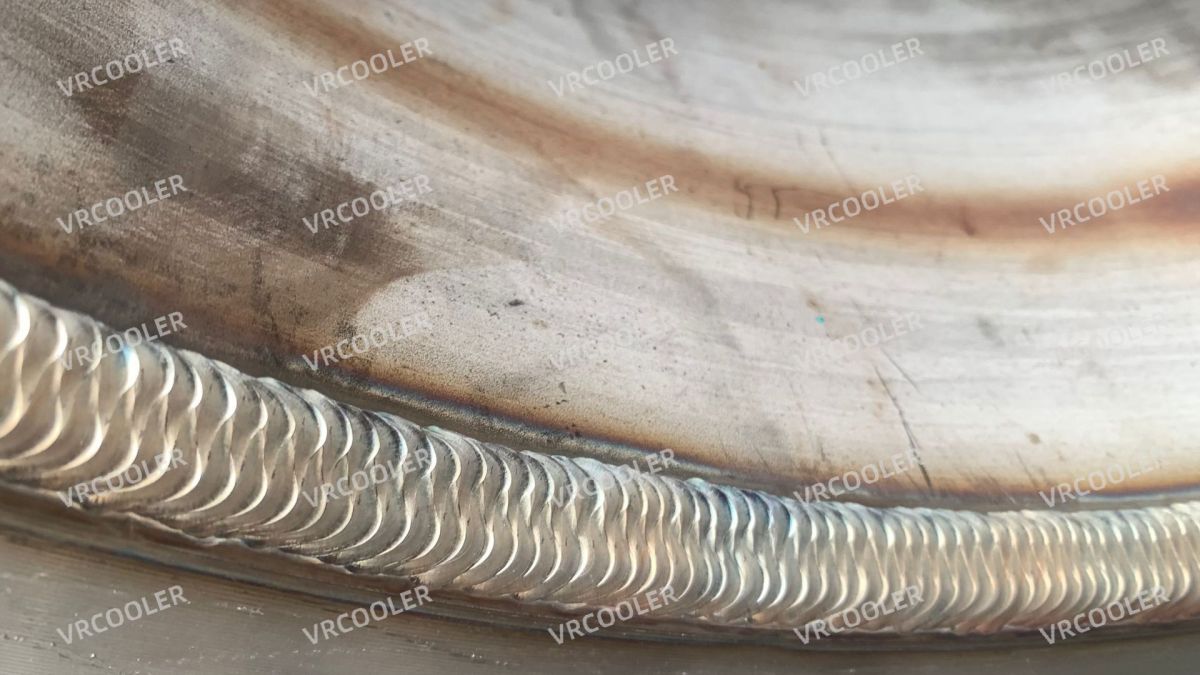
Standardized welding procedures
Application of qualified welding specifications
All welding operations in the project were carried out according to approved Welding Procedure Specifications (WPS). These documents define detailed requirements for materials, techniques, and parameters, ensuring that each weld meets consistent quality standards.
Strict control of welding parameters
During fabrication, parameters such as current, voltage, and heat input were carefully controlled. Maintaining stable parameters is essential to avoid defects such as incomplete fusion, porosity, or excessive distortion.
Full traceability throughout production
Each weld seam was documented, including welder identification, process parameters, and inspection results. This traceability ensures accountability and allows future verification if any issue arises during operation.
Skilled welders ensure consistency
Certified personnel for pressure welding
Only certified welders with relevant qualifications were assigned to perform welding tasks on pressure-bearing components. Their certification ensures they are capable of meeting strict industry standards.
Experience with exchanger structures
Shell and tube heat exchangers have complex geometries, especially around tube sheets and nozzles. Experienced welders understand these structural challenges and apply appropriate techniques to ensure quality.
Reduced variability in workmanship
Skilled operators maintain consistency in weld appearance and internal quality, minimizing variations that could otherwise lead to weak points in the structure.
Non-destructive testing safeguards quality
Radiographic testing for internal integrity
Radiographic (X-ray) inspection was applied to detect internal defects such as voids or lack of fusion within the weld. This method ensures that hidden flaws are identified before the equipment is put into service.
Penetrant testing for surface defects
Liquid penetrant testing was used to identify surface cracks or discontinuities. This is particularly important for areas exposed to thermal stress during operation.
Comprehensive inspection coverage
All critical weld seams were subjected to inspection according to project requirements. This multi-level testing approach ensures that the entire pressure boundary meets safety expectations.
Controlling welding deformation
Managing heat-induced distortion
Welding introduces heat that can cause expansion and deformation of metal components. Proper welding sequences and techniques were applied to minimize these effects.
Maintaining alignment of components
Accurate alignment between the shell and tube sheet is essential for proper assembly and performance. Distortion control helps maintain this alignment throughout fabrication.
Ensuring dimensional accuracy
By controlling deformation, the final equipment meets dimensional tolerances, which is important for installation and long-term operation stability.
Proven performance after installation
Leak-free operation under pressure
After installation, the heat exchanger operated without any leakage, confirming the effectiveness of welding and inspection processes.
Stable performance in continuous service
The exchanger maintained consistent thermal performance even under long operating hours, demonstrating the reliability of its welded structure.
Reduced maintenance and downtime
High welding quality minimized the need for repairs, helping the customer reduce maintenance costs and avoid unexpected shutdowns.