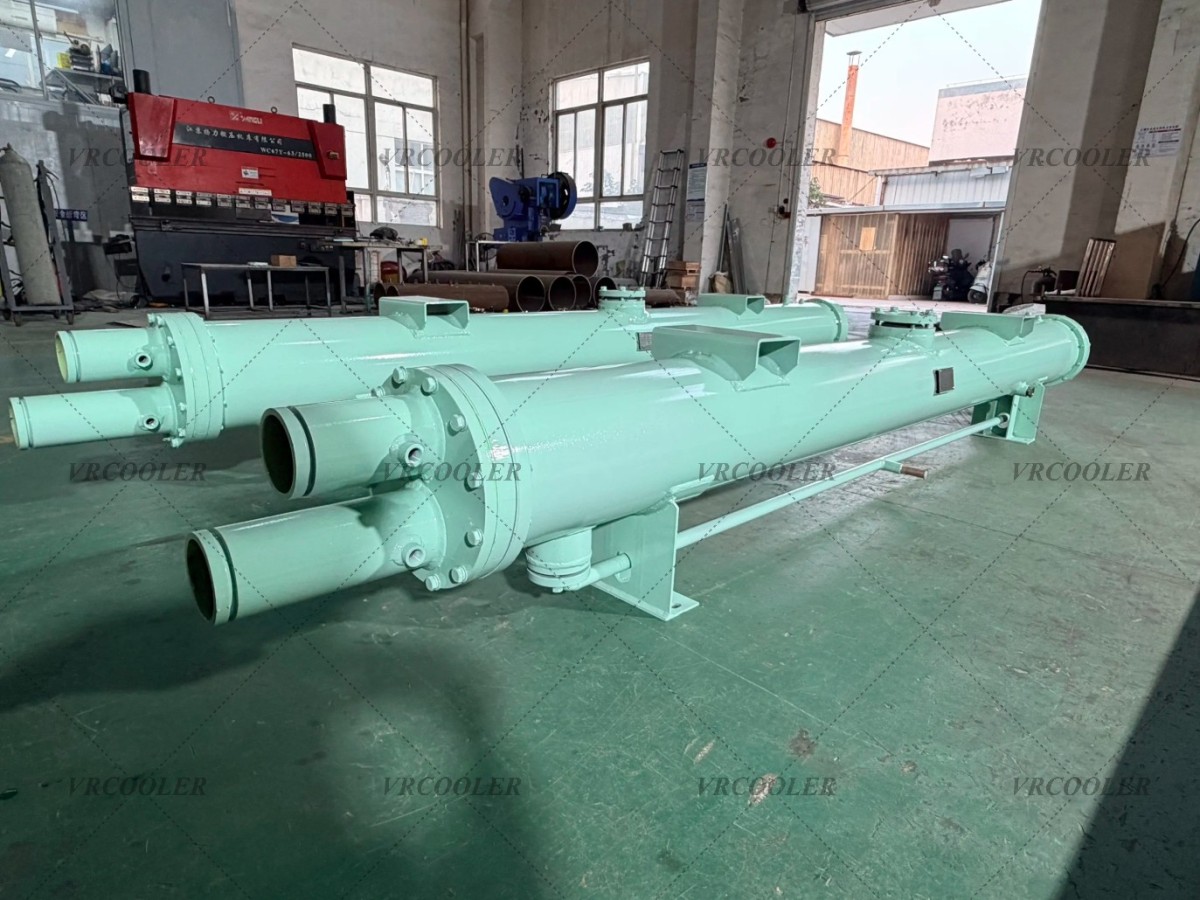
For drilling-platform air-conditioning maintenance, this shell-and-tube heat exchanger application uses B10 copper-nickel tubing to replace the original HAl77-2 aluminum-brass tubing. The objective is to support dependable cooling while matching the operating requirements and installation arrangement of the existing equipment. Tube-material selection is considered alongside heat-transfer performance, mechanical compatibility and maintenance access.
The horizontal cylindrical shells, bolted end connections and mounting supports. For replacement equipment, these interfaces matter: nozzle positions, connection sizes, support spacing and available installation clearance need to match the platform’s arrangement. Checking these details against existing drawings and site measurements helps limit modifications during installation.
B10 belongs to the copper-nickel alloy family containing approximately 10% nickel. It is used in marine heat-exchange applications because of its corrosion behavior in seawater. Research on B10 shows that the formation and condition of its protective surface film strongly influence corrosion resistance. The complete tube specification and material certificates should establish the supplied composition and properties.
Where seawater is used as the cooling medium, tube selection needs to account for water quality, temperature, flow velocity and suspended solids. Suitable flow conditions and commissioning practices help protect the tube surfaces. The compatibility of the new tubing with tubesheets, water boxes and other wetted components also deserves attention, including possible galvanic interactions between different metals.
Changing from HAl77-2 to B10 calls for a thermal review. Tube-wall conductivity, wall thickness, heat-transfer area, fluid velocities and fouling resistance all contribute to exchanger performance. The required duty and allowable pressure drop should be checked using the replacement material and actual operating conditions. A material substitution alone does not establish an increase in cooling capacity.
Mechanical compatibility is equally important. Tube diameter, length, wall thickness and manufacturing tolerances must suit the selected bundle arrangement. Tube-to-tubesheet joint details need to match the materials and design requirements. Where existing components are retained, their condition should be assessed before they are incorporated into the maintenance work.
Inspection provides the evidence needed to accept the replacement exchanger. The agreed scope can include material verification, dimensional checks, examination of tube joints and pressure or leakage testing under the approved procedure. Recording the results supports maintenance traceability and provides a reference for future inspections.
For a Vrcoolertech drilling-platform air-conditioning heat exchanger enquiry, provide the existing drawings, tube specification, working fluids, design pressures, operating temperatures and required duty. Connection details, installation space and inspection requirements help define a replacement suited to the equipment and its service conditions.