
Vrcooler offers custom aftermarket replacements for Bloksma tank cleaning heaters, using the original drawings and confirmed operating data to match an existing installation. The referenced horizontal shell-and-tube unit uses thermal oil to heat seawater for tank washing, keeping the heating medium and washing water in separate circuits.
According to the reference specification, connections N1–N2 serve the thermal-oil circuit, with a design temperature of 300°C and a design pressure of 10 barg. Connections N3–N4 serve the seawater circuit, with a design temperature of 120°C and a design pressure of 15 barg. The listed test pressures are 15 barg for the thermal-oil side and 22.5 barg for the seawater side.
The overall length of approximately 2,790 mm and a shell diameter of 323.9 mm. The reference data also lists an empty weight of approximately 512 kg, with internal volumes of 138 liters for thermal oil and 35 liters for seawater. Nozzle locations, flange drilling, support positions, and service clearances are checked during replacement design to establish compatibility with the existing pipework and foundation.
Thermal selection uses the actual thermal-oil inlet temperature and flow, seawater inlet temperature, required washing-water outlet temperature, and water flow rate. These operating values establish the heating capacity. The documented design temperatures and pressures define the mechanical requirements and do not establish the normal washing-water temperature.
Seawater service requires careful selection of tubes, tube sheets, and water-end materials. Seals and joints must also suit the thermal-oil temperature range. The replacement design needs to accommodate thermal expansion and provide access for inspection and cleaning, with material selection confirmed against the original records and current operating conditions.
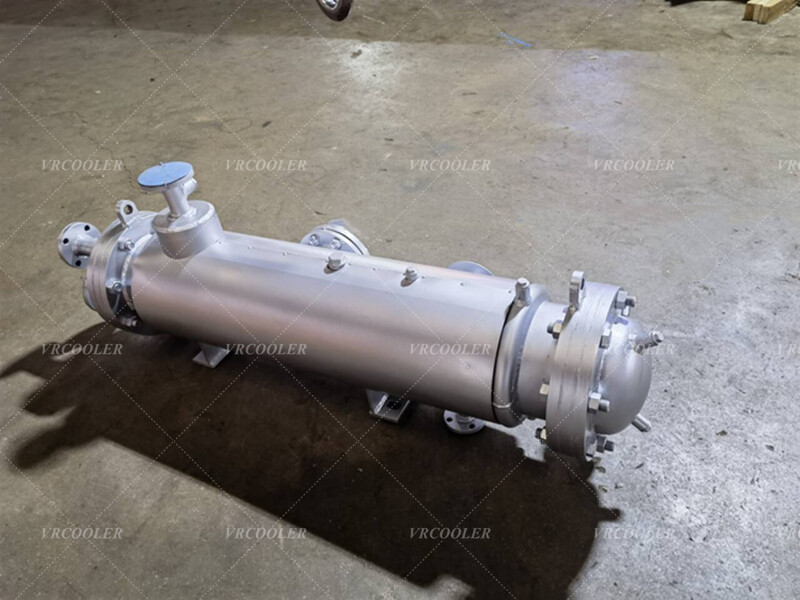
For a Bloksma tank cleaning heater replacement, provide Vrcooler with the original nameplate, dimension drawing, connection details, material specification, and operating data. Reviewing these together allows the proposed unit to be matched for installation, heating duty, and pressure loss before manufacture.