
A shell & tube condenser is one of the most reliable heat exchangers used in refrigeration, HVAC, chiller, and industrial cooling systems. It is designed to condense refrigerant vapor by transferring heat to cooling water flowing through the tube side. For systems using HFC or HCFC refrigerants, a properly designed shell and tube condenser provides stable condensing performance, strong mechanical reliability, and long service life.
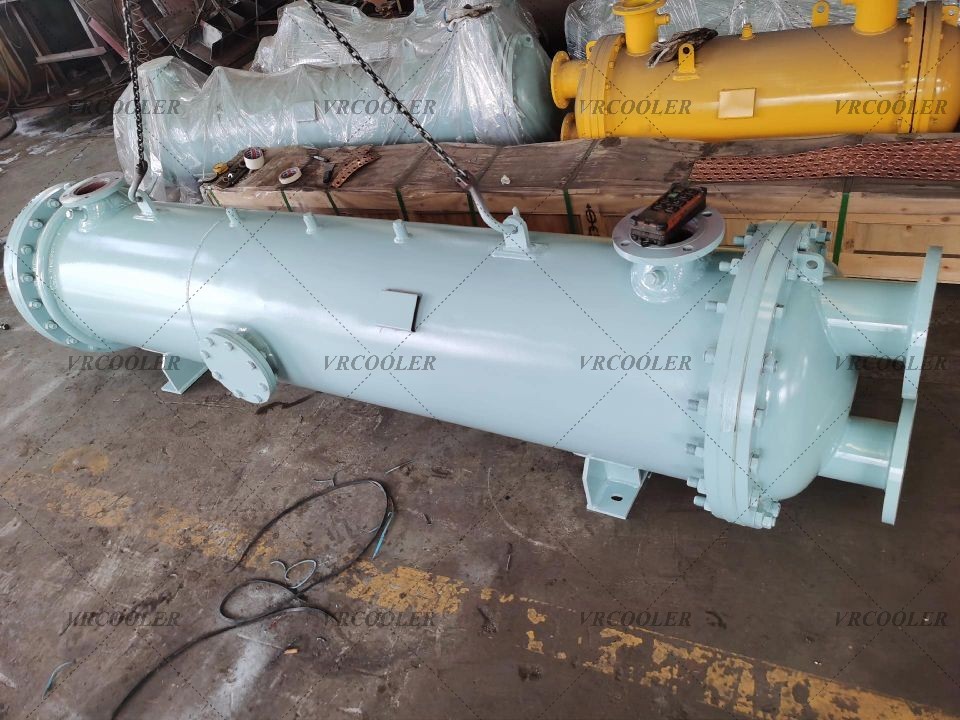
For this application, the condenser design conditions are clearly defined:
These parameters indicate a robust water-cooled condenser suitable for medium- and high-duty refrigeration systems. The refrigerant vapor enters the shell side, where it releases heat and condenses on the outside of the tubes. Cooling water flows through the tube side and carries the heat away from the condenser. This arrangement is widely used because it gives good heat transfer performance and allows the water side to be cleaned or serviced more easily.
The 300 PSIG shell-side pressure rating makes the condenser suitable for many HFC and HCFC refrigeration duties, depending on the refrigerant type and operating condition. The 150°C shell-side design temperature provides a strong safety margin for high discharge temperature conditions. On the tube side, the 300 PSIG water design pressure allows the condenser to operate with pressurized cooling water systems, while the 50°C tube-side design temperature is suitable for many cooling tower or chilled water rejection applications.
A shell and tube condenser for HFC and HCFC refrigerants should be carefully designed according to actual operating data, including refrigerant type, condensing temperature, cooling capacity, water inlet and outlet temperatures, water flow rate, fouling factor, allowable pressure drop, and installation space. Even when the pressure rating is fixed, the internal tube layout, shell diameter, baffle arrangement, and water pass design must be selected correctly to achieve stable condensation and efficient heat rejection.
Material selection is also important. For standard fresh water cooling, copper tubes with carbon steel shell construction are commonly used. If the cooling water quality is poor or contains chlorides, stainless steel, copper-nickel, or titanium tubes may be considered. Tube sheet material, gasket selection, nozzle design, and corrosion allowance should also match the working environment.
A well-designed shell & tube condenser can offer several advantages:
- Stable refrigerant condensation
- High heat transfer efficiency
- Strong pressure-bearing construction
- Easy water-side inspection and cleaning
- Customizable tube material and pass arrangement
- Suitable for chillers, refrigeration plants, and industrial cooling systems
- Long operating life with proper water treatment and maintenance
For replacement projects, the condenser can be customized according to the original unit’s dimensions, connection sizes, refrigerant circuit, water-side nozzles, mounting position, and capacity requirement. This makes it easier to replace an old condenser without major piping or system modification.
In summary, this shell & tube condenser for HFC / HCFC refrigerants is designed for reliable water-cooled heat rejection, with 300 PSIG design pressure on both shell and tube sides, 150°C shell-side temperature, and 50°C water-side temperature. With proper thermal design and material selection, it can provide dependable condensing performance for refrigeration, chiller, and industrial cooling applications.