
A hydraulic power unit generates heat whenever oil flows through pumps, valves, motors and restricted passages. If this heat is not removed effectively, the hydraulic oil temperature continues to rise, reducing viscosity and weakening its ability to lubricate moving components. Excessive temperature can also accelerate seal aging, increase internal leakage and shorten the service life of pumps and valves.
A hydraulic oil power unit cooler removes this unwanted heat and keeps the oil within a stable operating range. For industrial systems with continuous operation or high heat loads, a water-cooled shell and tube cooler provides dependable performance in a compact structure.
How a Hydraulic Oil Power Unit Cooler Works
In a typical shell and tube hydraulic oil cooler, cooling water passes through the tubes while hot hydraulic oil flows through the shell. Heat transfers from the oil through the tube walls and into the cooling water without mixing the two fluids.
Baffles installed inside the shell direct the oil across the tube bundle several times. This cross-flow movement improves turbulence and increases heat-transfer efficiency. After cooling, the oil returns to the hydraulic tank or lubrication circuit, while the warmed cooling water leaves the heat exchanger.
The final circuit arrangement can be adjusted according to the oil viscosity, water quality, allowable pressure drop and maintenance requirements.
Shell and Tube Construction
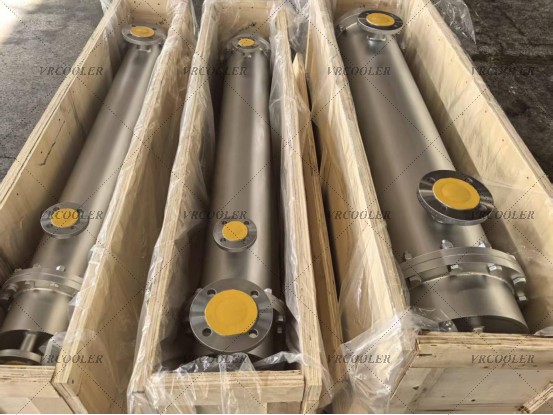
The cooler shown uses a practical industrial shell and tube configuration. Its principal components include the shell, tube bundle, baffles, tube sheets, bonnets, flanges, gaskets, O-rings and drainage connections.
The tube bundle contains multiple small-diameter tubes that provide the heat-transfer surface. One end of the bundle uses a fixed tube sheet, while the opposite side incorporates a floating tube sheet. This arrangement allows the tube bundle to expand and contract when oil and water operate at different temperatures, reducing thermal stress on the tubes and joints.
The bonnet chambers distribute cooling water through the tubes. Zinc anodes may be installed in the water chambers to provide additional protection against galvanic corrosion. Drain sockets and plugs allow residual liquid to be removed during shutdown, maintenance or cold-weather storage.
A removable bonnet and accessible tube bundle make internal inspection and tube-side cleaning easier. This is particularly useful when cooling water contains minerals, sediment or other deposits.
Why Hydraulic Oil Temperature Matters
Stable oil temperature directly affects hydraulic system efficiency. When oil becomes too hot, it loses viscosity and may no longer maintain an adequate lubricating film between moving surfaces. This can lead to greater wear, reduced volumetric efficiency and premature equipment failure.
High oil temperature can also harden seals, damage hoses and promote oil oxidation. Oxidized oil creates sludge and varnish that can contaminate valves and narrow flow passages. By maintaining the correct operating temperature, the cooler helps the hydraulic system run smoothly and reduces unplanned maintenance.
Typical Applications
Hydraulic oil power unit coolers are widely used with hydraulic power packs, presses, injection-moulding machines, machine tools, steel-processing equipment, marine deck machinery, mining systems, lifting equipment, wind turbines and industrial production lines.
They can also be used in lubrication systems for gearboxes, bearings and heavy rotating machinery. Both original-equipment and replacement designs can be produced according to the available installation space and operating conditions.
Material Options
Material selection depends mainly on the hydraulic oil, cooling-water quality, operating pressure and surrounding environment. Carbon steel is commonly used for the shell, while copper or copper-alloy tubes provide good thermal conductivity for standard industrial-water service.
For more corrosive conditions, the tubes, tube sheets or bonnets can be manufactured from stainless steel, copper-nickel alloy or titanium. Seawater applications normally require more corrosion-resistant materials than closed-loop fresh-water systems.
Gasket and O-ring materials must also be compatible with the hydraulic oil and maximum operating temperature. Common sealing options include NBR, EPDM and FKM, depending on the fluids and design conditions.
Custom Hydraulic Oil Cooler Design
A properly selected cooler should remove the required heat without creating excessive oil-side or water-side pressure loss. The design therefore needs to consider oil type, oil flow rate, oil inlet and required outlet temperatures, cooling-water temperatures, water flow rate, operating pressure and allowable pressure drop.
Connection sizes, orientation, installation dimensions, fouling allowance and material requirements should also be confirmed. For replacement projects, the existing cooler model, nameplate, drawing and connection dimensions help ensure that the new unit fits the original hydraulic system with minimal modification.
VRcooler can design hydraulic oil coolers for new power units or manufacture replacements for discontinued and damaged equipment. The cooler can be customized with fixed or removable tube bundles, multiple tube passes, different flange standards and corrosion-resistant material combinations.
Inspection and Maintenance
Regular maintenance keeps the heat exchanger operating efficiently. Cooling-water passages should be inspected for scale, rust, sediment and biological deposits. Oil-side contamination should also be monitored, especially when the hydraulic system has experienced pump or seal damage.
A gradual increase in oil temperature may indicate fouling, inadequate cooling-water flow, an obstructed oil passage or an incorrectly operating control valve. Pressure testing can be carried out during maintenance to check the integrity of the tubes and seals.
If the cooler is shut down in freezing conditions, all water should be drained completely. Water remaining inside the tubes or bonnet chambers can freeze, expand and damage the tube bundle or housing.
Conclusion
A shell and tube hydraulic oil power unit cooler provides stable, efficient cooling for demanding industrial hydraulic systems. Its compact construction, accessible tube bundle and flexible material options make it suitable for both standard factory water and corrosive cooling environments.
By keeping hydraulic oil within the correct temperature range, the cooler protects pumps, valves, seals and other critical components while improving operating reliability. A customized design based on actual oil and cooling-water conditions delivers better performance, easier installation and longer service life.