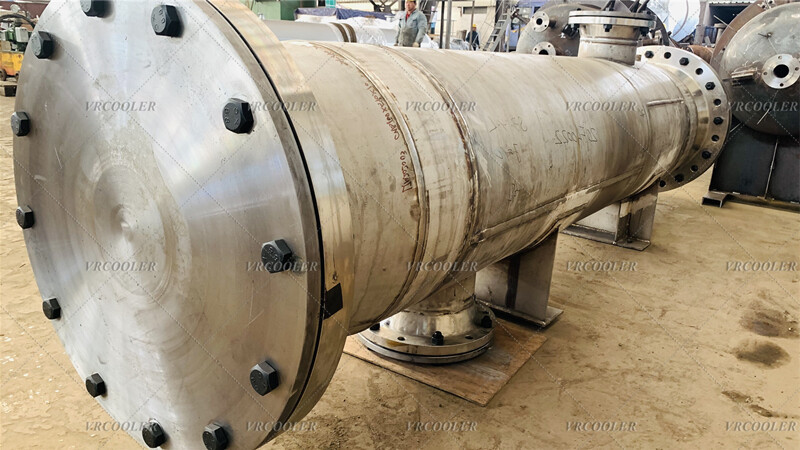
Shell and tube heat exchangers work based on the principle of heat transfer between two fluids separated by a tube wall. Here's how they operate:
Fluid Flow Paths:
The heat exchanger consists of a shell (a large cylindrical or rectangular chamber) and a bundle of tubes. One fluid flows through the tubes (referred to as the tube side fluid), while the other fluid flows over the tubes within the shell (known as the shell side fluid).
Heat Transfer Process:
As the hot and cold fluids enter the heat exchanger, they are brought into close proximity but remain separated by the tube walls.
Heat transfer occurs through conduction across the tube wall. The hot fluid on one side of the tube wall transfers its heat to the tube wall, which then conducts the heat to the cold fluid on the other side.
The temperature difference between the two fluids drives the heat transfer. The heat flows from the higher temperature fluid to the lower temperature fluid until an equilibrium temperature is reached.
Shell Side Flow:
On the shell side, baffles are often used to direct the flow of the shell side fluid and increase its turbulence. This enhances heat transfer by promoting better mixing and reducing the formation of stagnant zones.
The shell side fluid may flow in a cross-flow, parallel flow, or a combination of both directions relative to the tube bundle.
Tube Side Flow:
The tube side fluid flows through the tubes, which can be arranged in different configurations such as straight tubes, U-tubes, or helical coils.
The flow rate and pressure of the tube side fluid can be adjusted to optimize heat transfer and meet the process requirements.
Heat Exchanger Efficiency:
The efficiency of a shell and tube heat exchanger depends on several factors, including the thermal properties of the fluids, the flow rates, the surface area of the tube bundle, and the design of the heat exchanger.
Engineers design these heat exchangers to maximize heat transfer while minimizing pressure drop and ensuring reliable operation.
By clicking "Allow All", you agree to the storage of cookies on your device to enhance site navigation, analyze site usage and assist with our marketing efforts. Cookie Notice