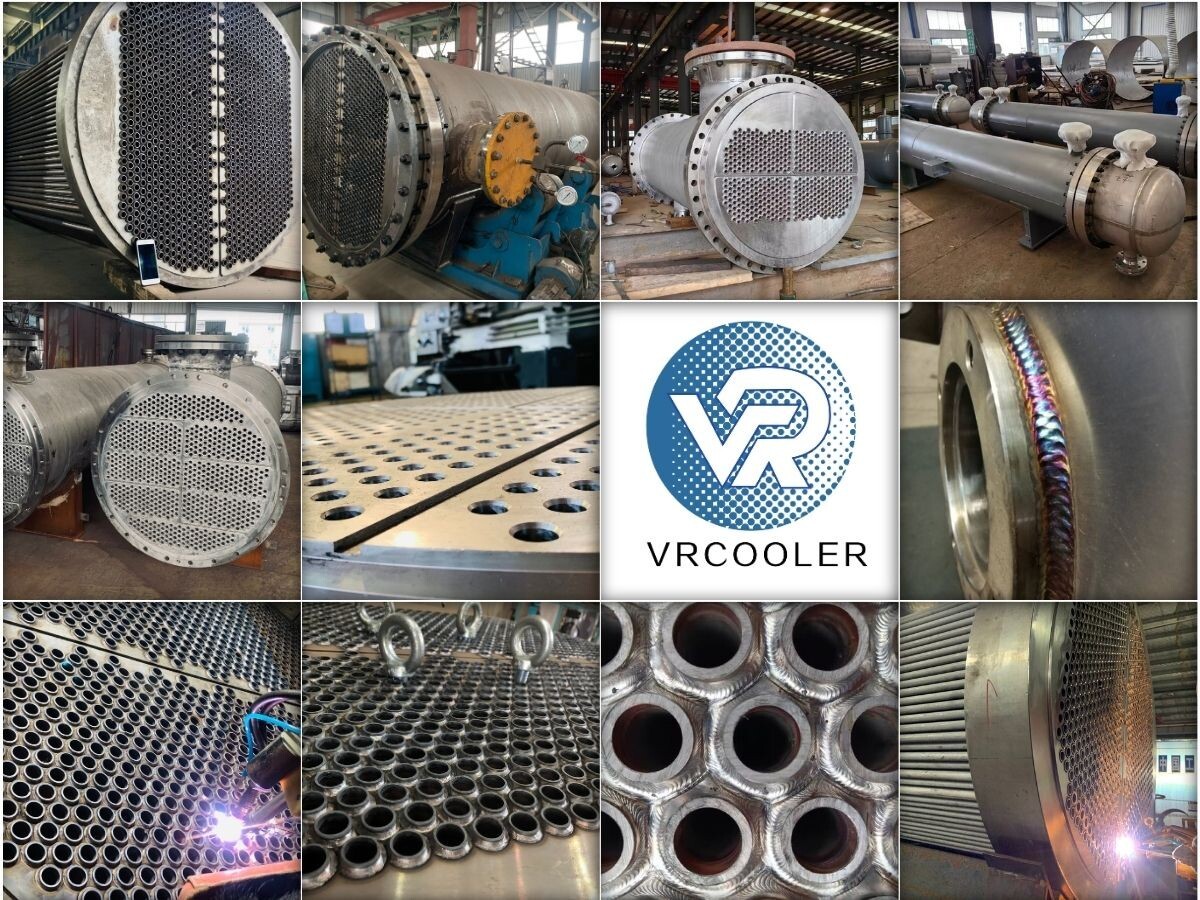
Deciding which fluid should flow on the shell side and which on the tube side in a shell and tube heat exchanger depends on several factors:
Thermal Properties:
Fluids with higher heat transfer coefficients are often placed on the tube side. This is because the tube side generally offers better heat transfer due to the smaller flow cross-section and higher flow velocities that can be achieved. For example, if one fluid has a significantly higher thermal conductivity, it may be more effective to have it on the tube side.
Fluids that are more viscous may be better suited for the shell side as the larger flow area can accommodate lower flow velocities without excessive pressure drop.
Pressure Considerations:
The fluid with the higher operating pressure is usually placed on the tube side. The tubes can be designed to withstand higher pressures more easily than the shell. This helps in ensuring the integrity and safety of the heat exchanger.
If a fluid requires a higher pressure containment, it should be routed through the tubes.
Corrosion and Fouling:
If one fluid is more corrosive, it is often placed on the tube side where it can be isolated from the shell material by using corrosion-resistant tube materials. This makes it easier to replace the tubes if corrosion occurs.
Fluids that are prone to fouling or depositing solids are typically placed on the shell side. This is because the shell is generally more accessible for cleaning and maintenance. Baffles on the shell side can also help to disrupt the flow and reduce fouling.
Temperature Range:
Fluids with extreme temperature ranges may be placed on the tube side for better control and to protect the shell from excessive thermal expansion or contraction.
If a fluid has a very high or very low temperature, it may be more appropriate to have it flow through the tubes where it can be better insulated or cooled.
Flow Rate Requirements:
Fluids that need a specific flow rate or have flow rate limitations may be directed to either the tube side or shell side based on the design constraints. The tube side can offer more control over flow rates due to its smaller flow area.
Cost and Maintenance:
Consider the cost of materials and maintenance when deciding. For example, if a particular tube material is expensive but necessary for one fluid, it may be more economical to use it on the tube side where the quantity of material required is less compared to the shell.
Ease of maintenance is also a factor. Fluids that require more frequent cleaning or inspection may be placed on the side that is easier to access for maintenance.