
Vrcoolertech offers custom shell-and-tube NH₃ evaporators for vacuum vapor recovery in cocoa processing. For this application, a horizontal configuration is preferred, with a stated water-vapor flow of approximately 15 kg/h, an inlet temperature of around 140°C, and a process-side operating pressure of approximately 3 mbar absolute.
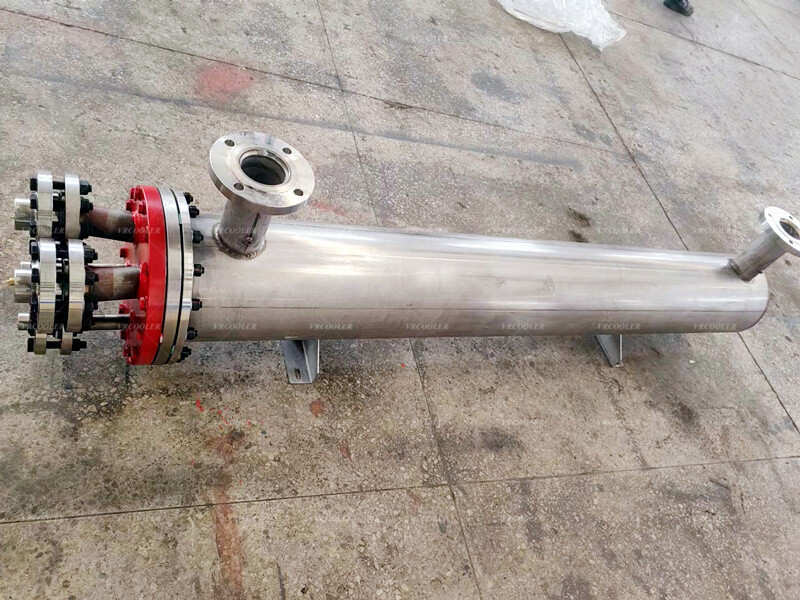
This duty combines an ammonia evaporator on the refrigeration side with an ice condenser on the process side. At 3 mbar absolute, the pressure is below water’s triple-point pressure of approximately 6.12 mbar. Evaporating R717 cools the heat-transfer surfaces sufficiently for the process water vapor to deposit as ice. The thermal duty includes cooling the incoming superheated vapor and removing the heat released during ice formation.
The requested operating period is approximately 12 hours per unit. At a constant flow of 15 kg/h, a unit capturing all incoming water vapor would accumulate about 180 kg of ice during that period. Tube spacing and available chamber volume therefore need to accommodate ice growth while maintaining vapor passages. Thermal selection must account for the increasing resistance of the ice layer throughout the operating cycle.
De-icing is specified every 12 hours using steam or hot steam condensate. The regeneration arrangement needs coordinated isolation, refrigerant management, meltwater drainage, re-cooling, and evacuation before the unit returns to service. Where continuous operation is required, two exchangers can alternate between vapor capture and regeneration.
The ice condenser works together with the vacuum system. Air leakage and other non-condensable gases still require removal by suitable vacuum equipment. Their flow rate, together with the allowable pressure loss through the exchanger and connecting pipework, affects the ability to maintain the specified process vacuum.
Mechanical design must cover the process-side vacuum, the separate ammonia pressure conditions, and temperature changes during de-icing. Connection locations, inspection access, drainage, and installation dimensions can be adapted to the existing system.