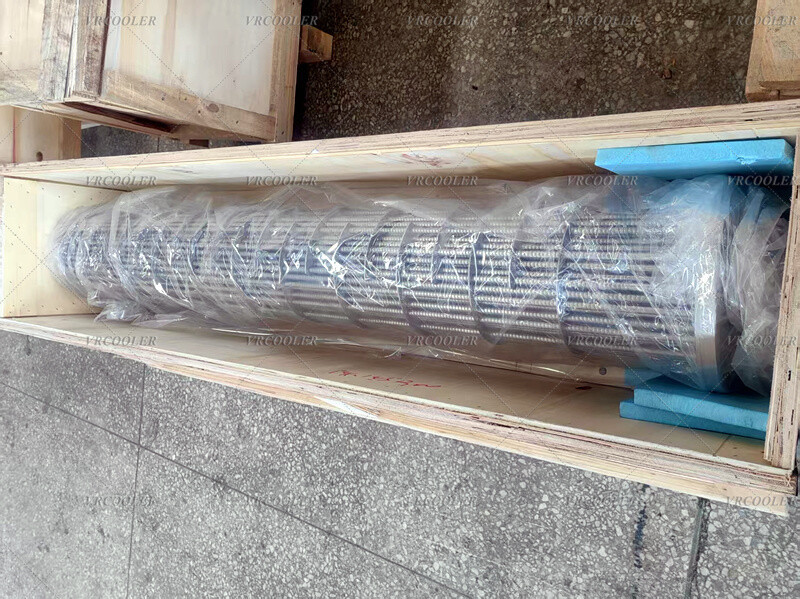
An inlet oil heat exchanger recovers heat from a hotter process stream to warm incoming oil before downstream processing. In a shell-and-tube design, heat passes through the tube walls while the two streams remain separate. For crude-oil applications, the exchanger must accommodate the actual oil, gas, and water composition alongside the required temperature rise.
The specified application uses hydrocarbon gas entering at 112°C to heat a crude-oil mixture from 34°C to 55°C. The hot stream has a target outlet temperature of 60°C. Total mass flow rates are 8,610 kg/h on the hot side and 73,193 kg/h on the cold side. These values define the process targets for exchanger selection.
Pressure drop is another important constraint. The hot-side operating pressure decreases from 510 to 490 kPa(g), matching the specified 20 kPa allowance. On the crude-oil side, pressure decreases from 705 to 675 kPa(g), with a 30 kPa allowance. The selected exchanger must be checked against both limits; calculated pressure losses have not yet been established.
The specified phase breakdown indicates condensation on the hot side, producing hydrocarbon liquid and water, together with increased vapor flow on the crude-oil side. Consequently, thermal sizing must account for phase changes and changing fluid properties. A reliable heat duty requires consistent inlet and outlet enthalpies for both complete streams, rather than a simple single-phase temperature calculation.
Crude-oil viscosity and fouling influence exchanger performance over time. Viscosity affects heat transfer and pressure loss, while deposits can reduce heat recovery and restrict flow. Tube dimensions, flow passages, fouling allowances, and cleaning arrangements should therefore reflect the expected fluid characteristics. Access for inspection and maintenance deserves attention during the initial design.
Shell-side and tube-side allocation should be selected through thermal, hydraulic, and maintenance assessment. The supplied process conditions do not assign either fluid to a specific side. Tube passes, baffle arrangement, condensate drainage, and phase distribution all require consideration. Mechanical configuration also matters: fixed-tubesheet and removable-bundle designs provide different provisions for cleaning access and differential thermal expansion.
Material selection should follow a review of the complete fluid composition, including any corrosive constituents in the hydrocarbon and water phases. Tubes, tubesheets, shell materials, and seals must suit the service conditions. Mechanical design temperatures, design pressures, and testing requirements also need separate confirmation; the listed operating pressures alone do not establish the equipment’s pressure rating.
Recovering process heat for inlet oil heating can reduce demand on separate heating and cooling equipment when integrated with the wider process. For a Vrcoolertech enquiry, provide the complete datasheet and notes, stream compositions, enthalpy data, fouling requirements, and installation limits so that heat-transfer area, construction, and expected performance can be evaluated.